🤫 The World Subscribes to You
For thirty years the internet subscribed to you without asking. We built the opposite - one profile you own, and a world that subscribes only to what you grant, with a receipt for every access.
Read articleBlogs
Ideas, releases, and privacy-first product stories from the hussh team. Browse product stories, AI agent patterns, privacy architecture, research notes, and launch updates.

Featured
For thirty years the internet subscribed to you without asking. We built the opposite - one profile you own, and a world that subscribes only to what you grant, with a receipt for every access.
Newsroom

For thirty years the internet subscribed to you without asking. We built the opposite - one profile you own, and a world that subscribes only to what you grant, with a receipt for every access.
Read article
We attacked our own consent ledger and found three real flaws - a chain that could be silently truncated, a race between reading and revoking, and an error message that leaked. Here is what broke, how we fixed it, and what we still cannot promise.
Read article
The consent banner asks the wrong entity, at the wrong moment, in the wrong language. Your agent should have answered before you arrived - once, on your terms, and fail-closed.
Read article
An honest product update on the Permission Gateway - what is running, what three security findings we fixed, what is still blocked, and what we deliberately have not built yet.
Read article
How we rebuilt local discovery for humans and their agents. The 🤫 Yellow Pages is a modern-day, proximity-first directory of 248,568 businesses and 616,145 named professionals across all 52 U.S. metros — consent-first, claimable, removable, and agent-to-agent. The anti-Avvo: built on the front-line experts who show up for real people.
Read article
A research paper on an open problem we have not solved: how to measure whether eight billion personal agents are genuinely useful, every day, without the behavioral telemetry our own architecture forbids. Formal problem statement, threat model where the operator is the adversary, a construction combining edge-local sketches, receipt-anchored derivation, calibrated noise and secure aggregation — and an honest account of what remains unsolved.
Read article
An experience paper on a total production outage: a read-only index that outgrew the memory available at process start, built at module load, transitively imported by unrelated routes — so a directory change took the whole site dark. Why warm tests, successful builds, and a staging deploy all failed to catch it; four design principles for serving large read-mostly indices on autoscaled runtimes; and the deploy gate whose absence was the actual defect.
Read article
A formal model for scoped, revocable, auditable data access. Consent expressed as a small-step transition system over grants, requests, and receipts — with five properties (no access without a live grant, receipt completeness, revocation totality, non-escalation, purpose binding) and an unusually long section on what the model provably does not prevent: inference, aggregation across grants, cross-boundary re-sharing, and the fact that revocation cannot un-know.
Read article
Building a directory of 248,568 organizations and 616,145 named professionals across 52 U.S. metros, where every subject can demand deletion. Why removability is a design constraint on the resolution architecture and not a compliance feature — deliberate under-merging, claim-time verification against the authoritative regulator, collapsing 737 taxonomy codes into 27 human terms, and proximity as the primary key.
Read article
The security a federal agency demands and the trust a marketplace needs are the same thing: a signed receipt for every access. A build-in-the-open field note on what we shipped this week - a tamper-evident consent chain, vault-held keys, honestly-labeled hardware identity - and what we are honest we have not.
Read article
Almost everything important we built this quarter is turned off. Why every meaningful control ships behind a kill-switch that defaults to no - what shipping dark means, the four rules that keep it from rotting into dead code, and the honest cost of doing it.
Read article
Rebuilding the directory as what it was always trying to be: a book of real people who do skilled work near you. 665 verified-at-source listings in King County, ZIP-proximity search, claimable and removable by the humans in it - and why the whole thing has to be agent-to-agent.
Read article
We graded ourselves by reading the code instead of asking how it was going, and published the result - the greens, the many ambers, and the reds. Including why we deliberately do not publish the specifics of unpatched security debt, and where that line sits.
Read article
An honest, optimistic essay about the anxiety of the AI transition, jobs, privacy, control, and trust, and a credible path through it: ownership, consent, transparency, and keeping the human at the center. Confident, not naive.
Read article
A research paper from Manish Sainani and the 🤫 Core Product and Technology Team on 🤫 Private Agent One: a private agent that answers only to its owner and works quietly for them, 24/7/365, with their trusted circle of people, AI agents, and machines — so they can live more fully. With gratitude to Thinking Machines Lab's essay on a human future, cited as inspiration. Consent-first, owned, human at the center.
Read article
Sharing your financial life with the people who advise you is still a mess of PDFs and portals. It does not have to be.
Read article
This week the internet gave agents payment, legitimacy, and authorization. It still has not given the person consent. PCHP is proposed to fill that gap — a peer to TLS.
Read article
We are donating the Personal Consent Handshake Protocol to the open-source community. Here is what it is, and why now.
Read article
The shortest path from zero to a working understanding of PCHP — for the developer who has five minutes.
Read article
Meet One Location Agent, a consent-first way to share live location with a person, purpose, duration, expiry, and clear control inside Hussh One.
Read article
See how One Location Assistant turns a natural-language request into a reviewable location workflow while keeping sensitive actions behind confirmation.
Read article
Explore consent-led location sharing for families and professional relationships, plus a fair comparison of One Location and Life360.
Read article
Intelligence has always been personal, formed by a lifetime of knowledge, experience, and taste. Owned, private AI lets a person compound their own intelligence instead of renting someone else's. On 🤫 Agent One, 🤫 Puppy One, consent, and keeping the human at the center.
Read article
For two decades the deal was free things for data, and the people who create the information owned none of the value. A candid essay on why your information should be your asset, held in a vault you own and worked on your behalf by a private 🤫 Agent One, with consent and receipts through the Personal Consent and Hushh Protocol.
Read article
🤫 hussh (hushh.ai) opens reservations for personal, private, and owned supercomputing, targeting a September 27, 2026 launch: 🤫 Agent One free for life, 🤫 Puppy One the personal supercomputer, and 🤫 Tag One, a safety wearable that is not a medical device. Reservations are $0.69, refundable.
Read article
Why supercomputing should be owned by the human, why now, what is coming on September 27, 2026, and how anyone can reserve or start free today. Meet 🤫 Agent One (free for life), 🤫 Puppy One, and 🤫 Tag One.
Read article
How 🤫 hussh goes to market: superpowers generally available, a field force in real neighborhoods, reservations on the doorstep for $0.69 refundable, and a community referral loop. Come knock with us.
Read article
A deep-research story on how people actually spend their days, why everyone is becoming a builder, and how 🤫 Agent One serves the human - 24/7/365, with the human always in control of their circle, information, knowledge, and creations.
Read article
Use Personal Agent Kai as a repeatable decision framework to stay clear, consistent, and goal-aligned in changing markets.
Read article
From new investors to busy professionals and families, Personal Agent Kai adapts to different decision styles while keeping control with the user.
Read article
Personal Agent Kai helps transform daily market overload into focused actions that align with your goals.
Read article
Markets move fast. Personal Agent Kai helps you cut through noise, stay grounded, and make clear, confident decisions.
Read article
A step-by-step walkthrough of the hussh Tech KYC and NDA onboarding flow, from verification to secure access.
Read article
How hussh Tech designs KYC and NDA onboarding with privacy-first controls like data minimization, encryption, and consent.
Read article
Why combining KYC and NDA early builds trust, speeds collaboration, and reduces risk for modern partners.
Read article
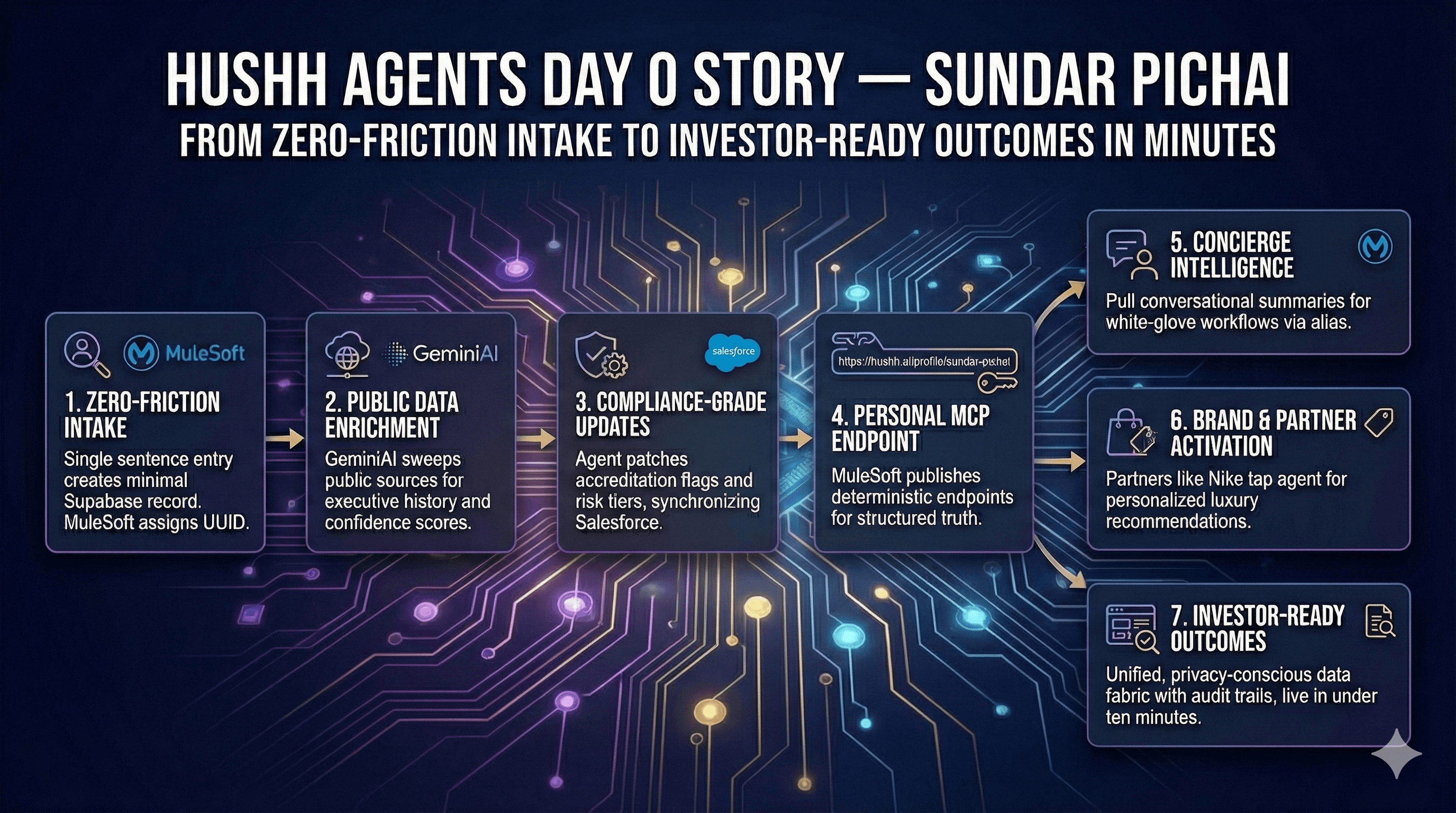
A single narrative showing how hussh’s creation, enrichment, update, and query agents spin up a verified profile in minutes.
Read article
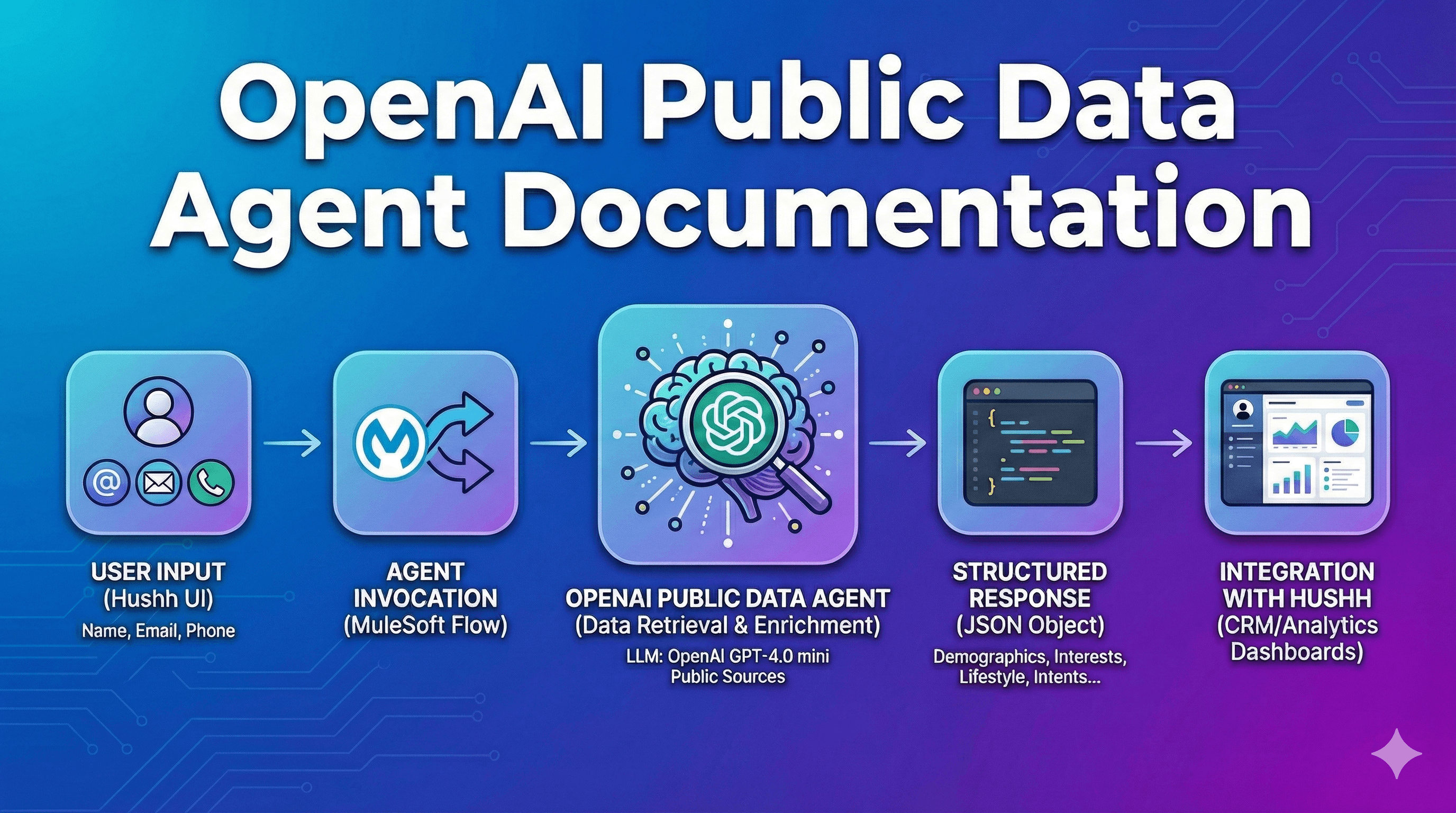
How hussh’s OpenAI Public Data Agent turns minimal identifiers into enriched JSON profiles for personalization.
Read article
Cloud Odyssey and hussh.ai built an intelligent Day 0 onboarding fabric with MuleSoft MCP, Salesforce, Supabase, and AI agents.
Read article
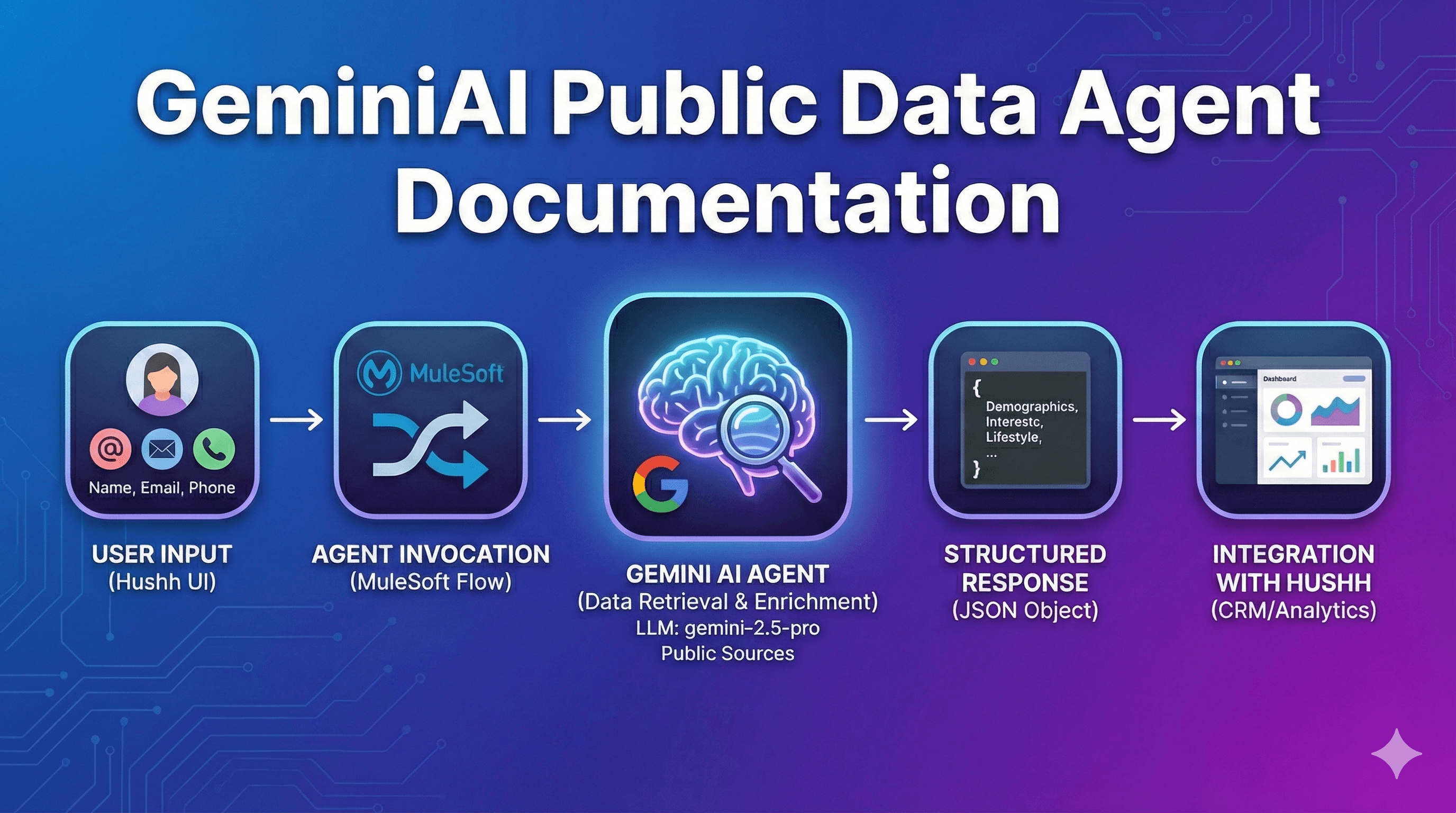
How hussh’s GeminiAI agent enriches user profiles with public data and feeds the /agents ecosystem.
Read article
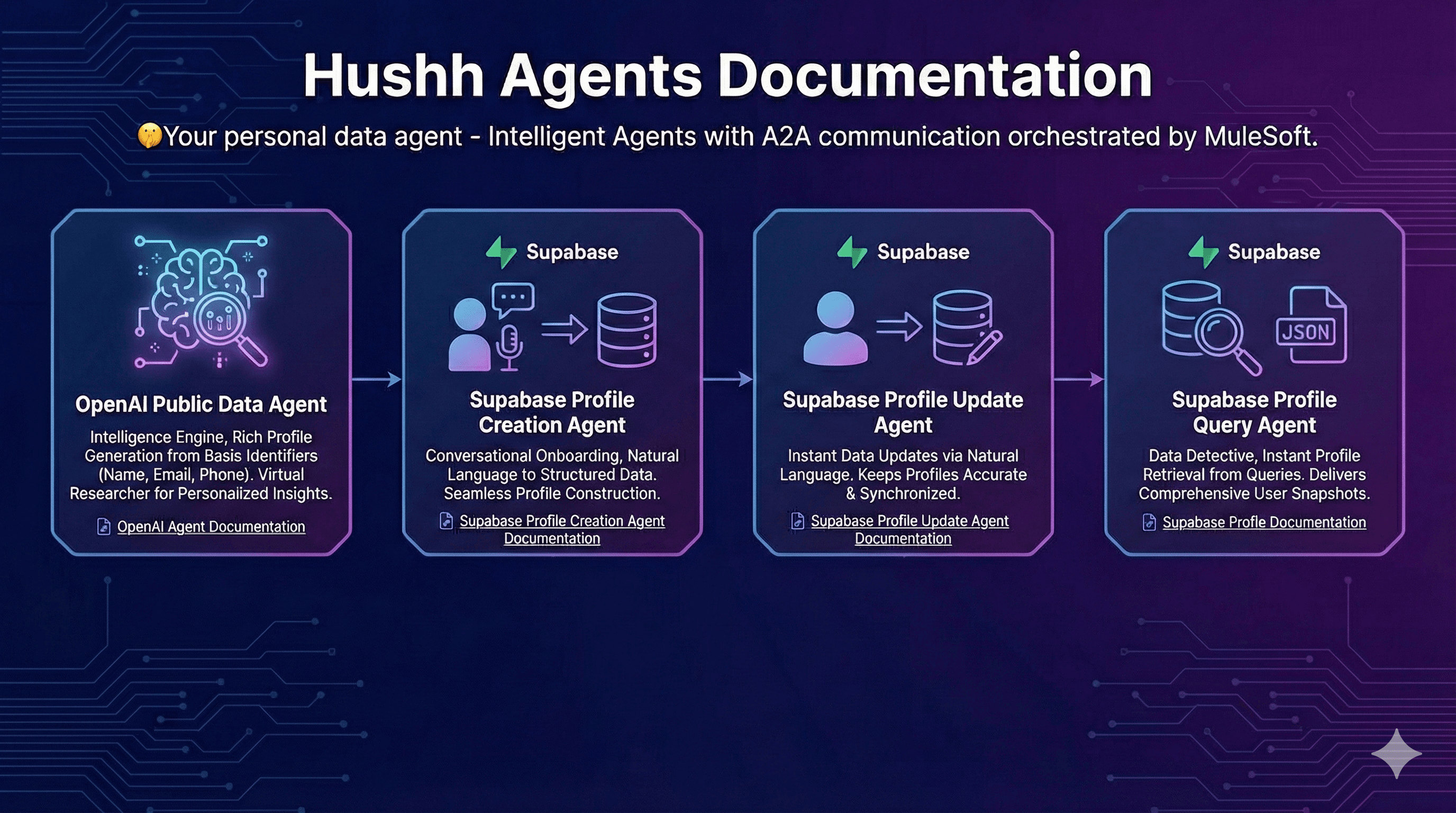
A tour of the A2A-powered agents that fuel the HushhOne ecosystem - from public data enrichment to Supabase automation.
Read article
Inside the AI-driven Brand User Data Query Agent that powers natural-language intelligence requests across the /agents catalog.
Read article
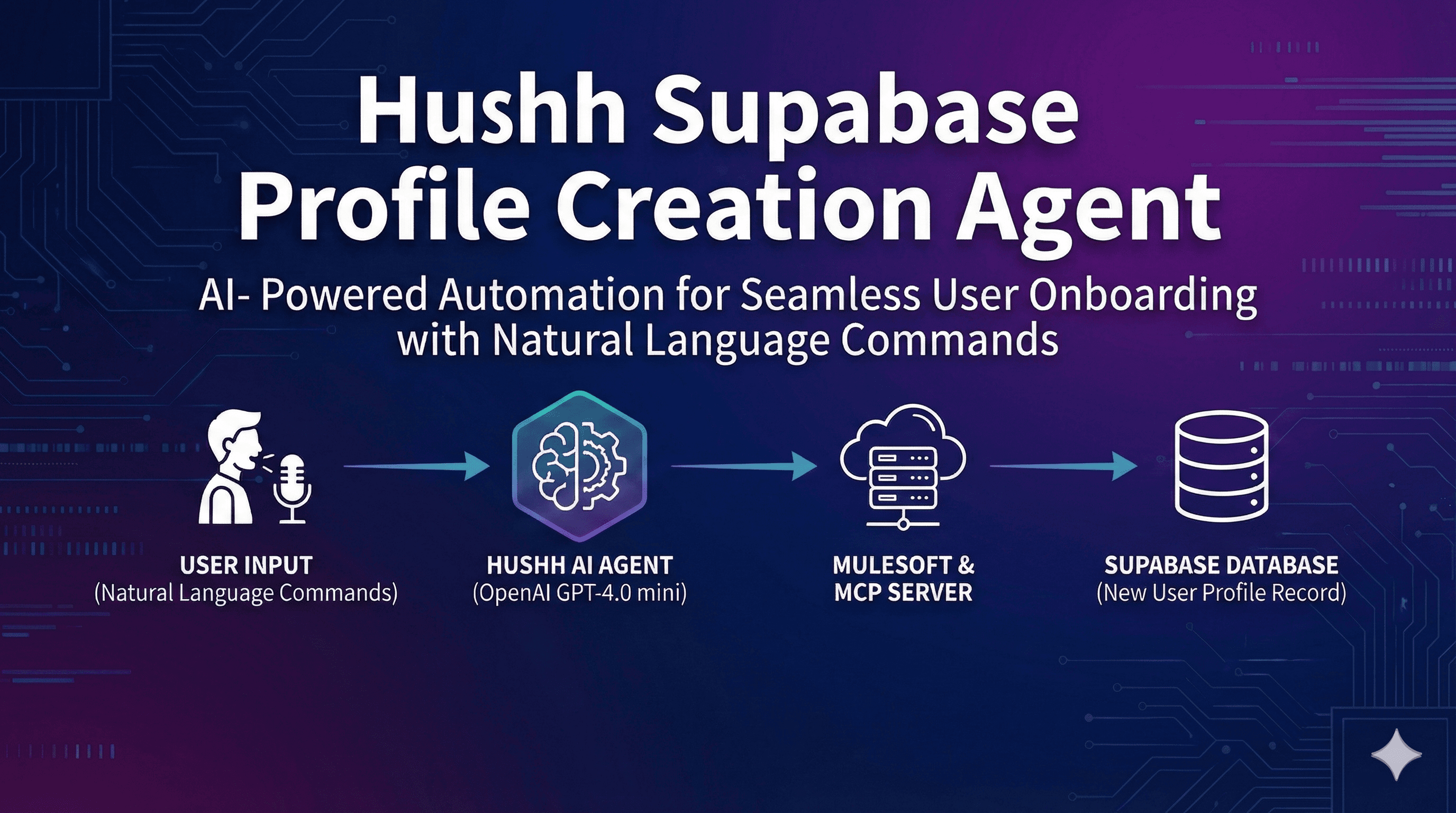
How hussh’s Supabase Profile Creation Agent turns natural-language instructions into structured Supabase records via MuleSoft MCP.
Read article
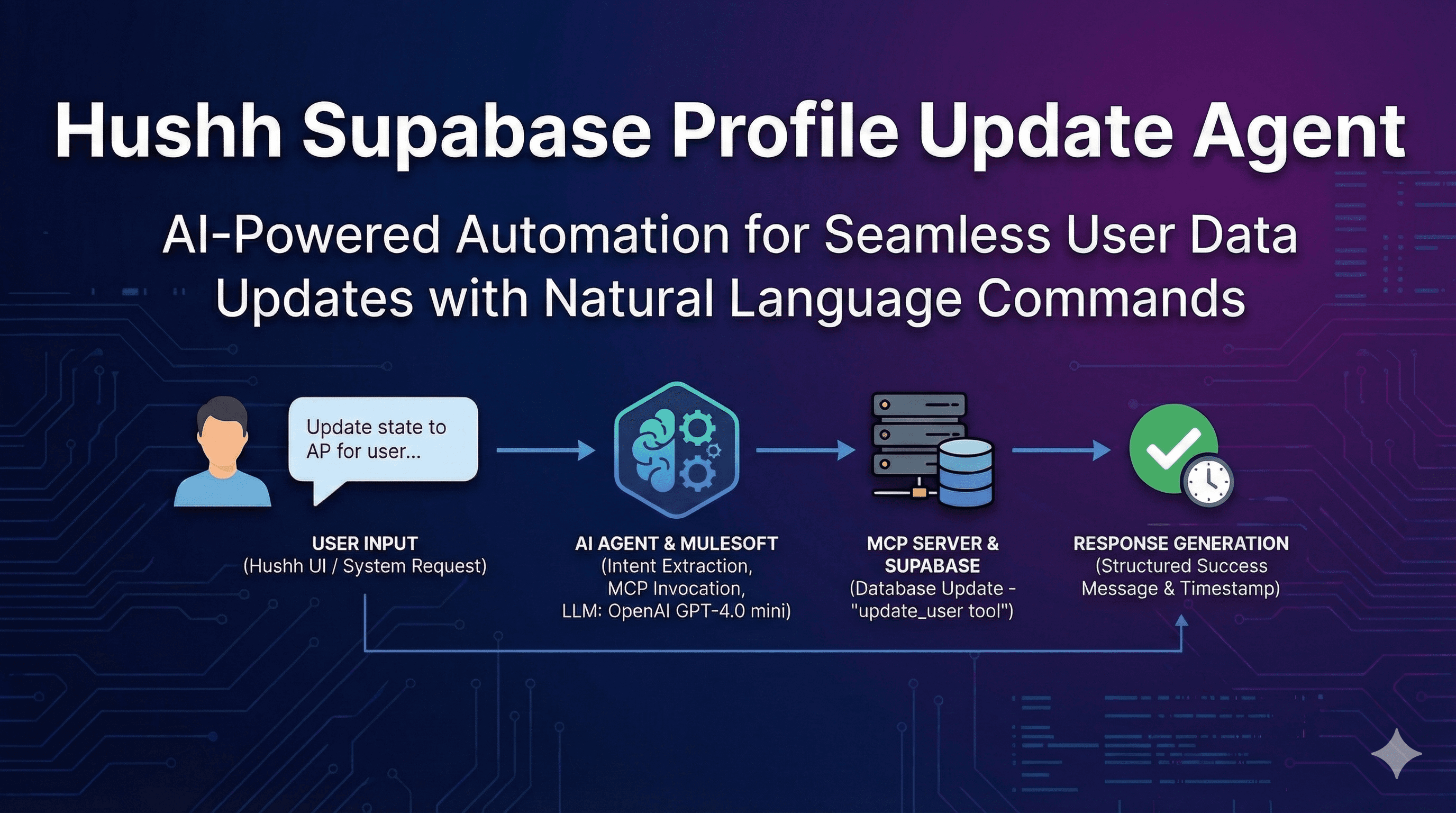
How hussh’s Supabase Profile Update Agent keeps CRM and personalization data accurate using natural-language commands over MuleSoft MCP.
Read article
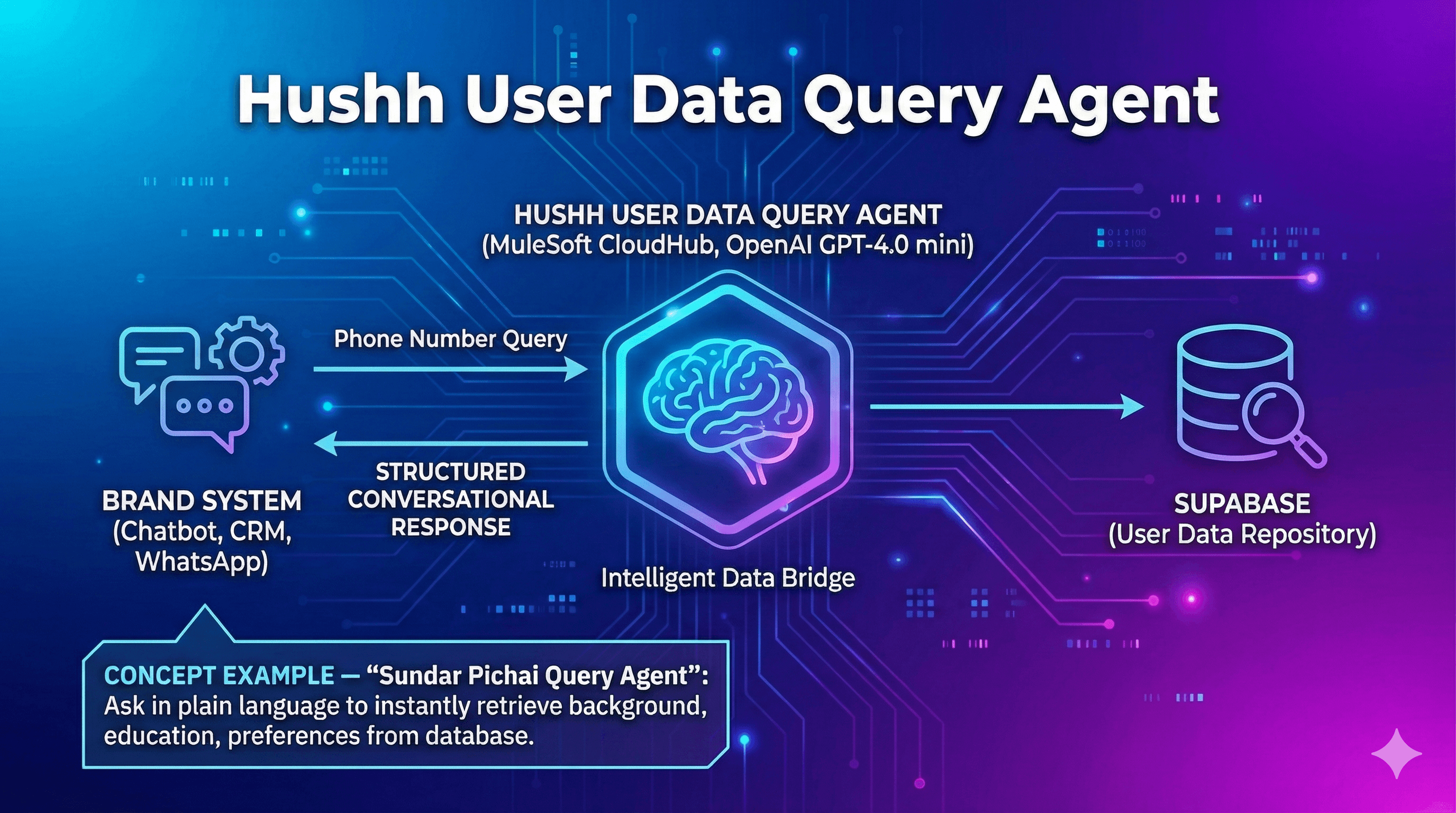
Meet the hussh User Data Query Agent - an AI bridge between phone-number prompts and fully enriched Supabase intelligence.
Read article
As AI capabilities rapidly evolve, product teams are being called to rethink the very foundations of software design. The shift from traditional app paradigms to intelligent systems demands more than new technologies; it requires a new mental model.
Read article
Explore how LangChain, LangGraph, and CrewAI are revolutionizing AI development by providing new architectural patterns for building intelligent, autonomous, and collaborative agent systems.
Read article
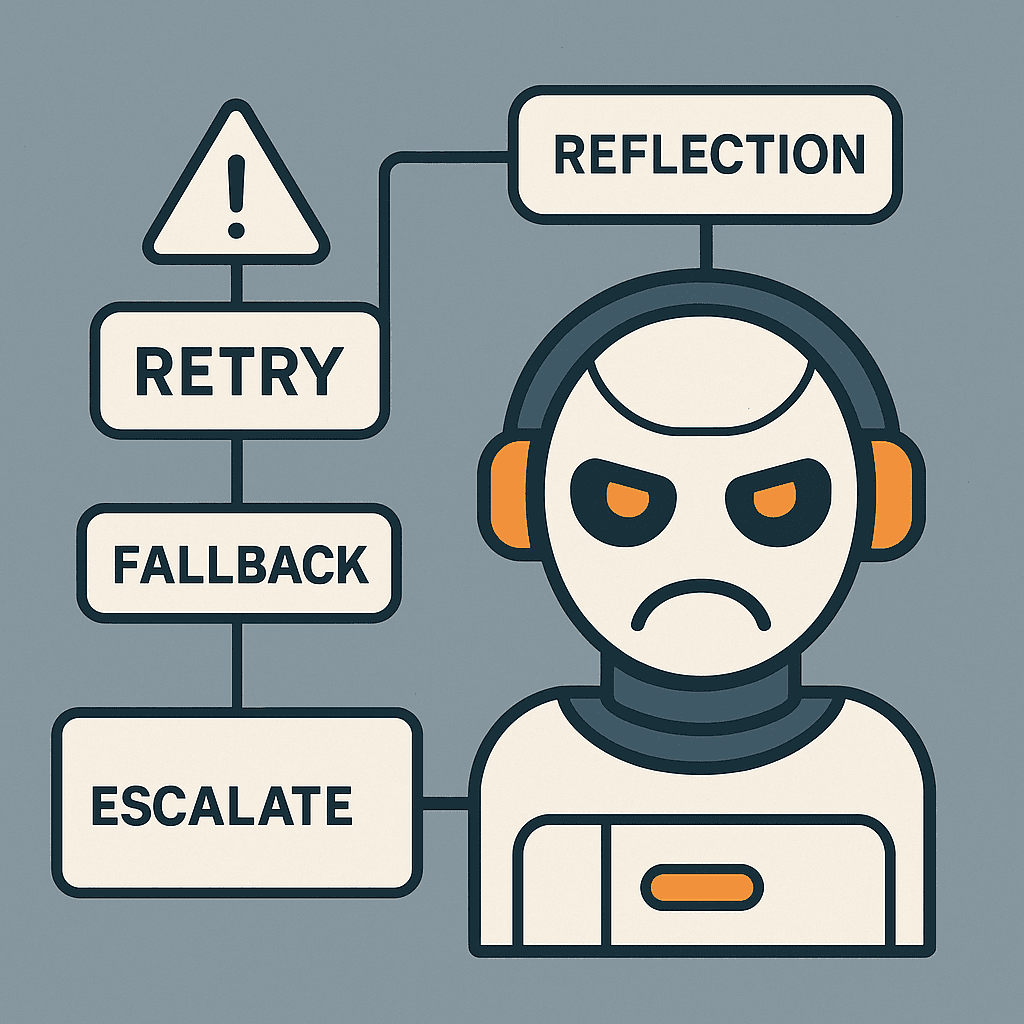
As AI agents become increasingly embedded in critical workflows, their reliability is no longer a luxury - it's a necessity. This post is a hands-on guide to designing resilient agents that not only perform well in ideal conditions but recover gracefully when things go wrong.
Read article
Explore why prompt engineering alone is no longer sufficient for modern AI applications. Learn how agentic systems with memory, planning, and tool use are revolutionizing AI development beyond simple prompts.
Read article
Discover the 7 essential design patterns that form the backbone of every successful AI agent system. From prompt chaining to reflection, learn the fundamental building blocks for reliable, goal-oriented agents.
Read article
Design patterns have long been the cornerstone of software architecture - from MVC in web development to factory methods in object-oriented design. Now, as AI becomes more intelligent and autonomous, we need new patterns: agentic design patterns.
Read article
Backed by hushhTech.com - A Proprietary Hedge Fund Fueling Open Research and AI Innovation
Read article
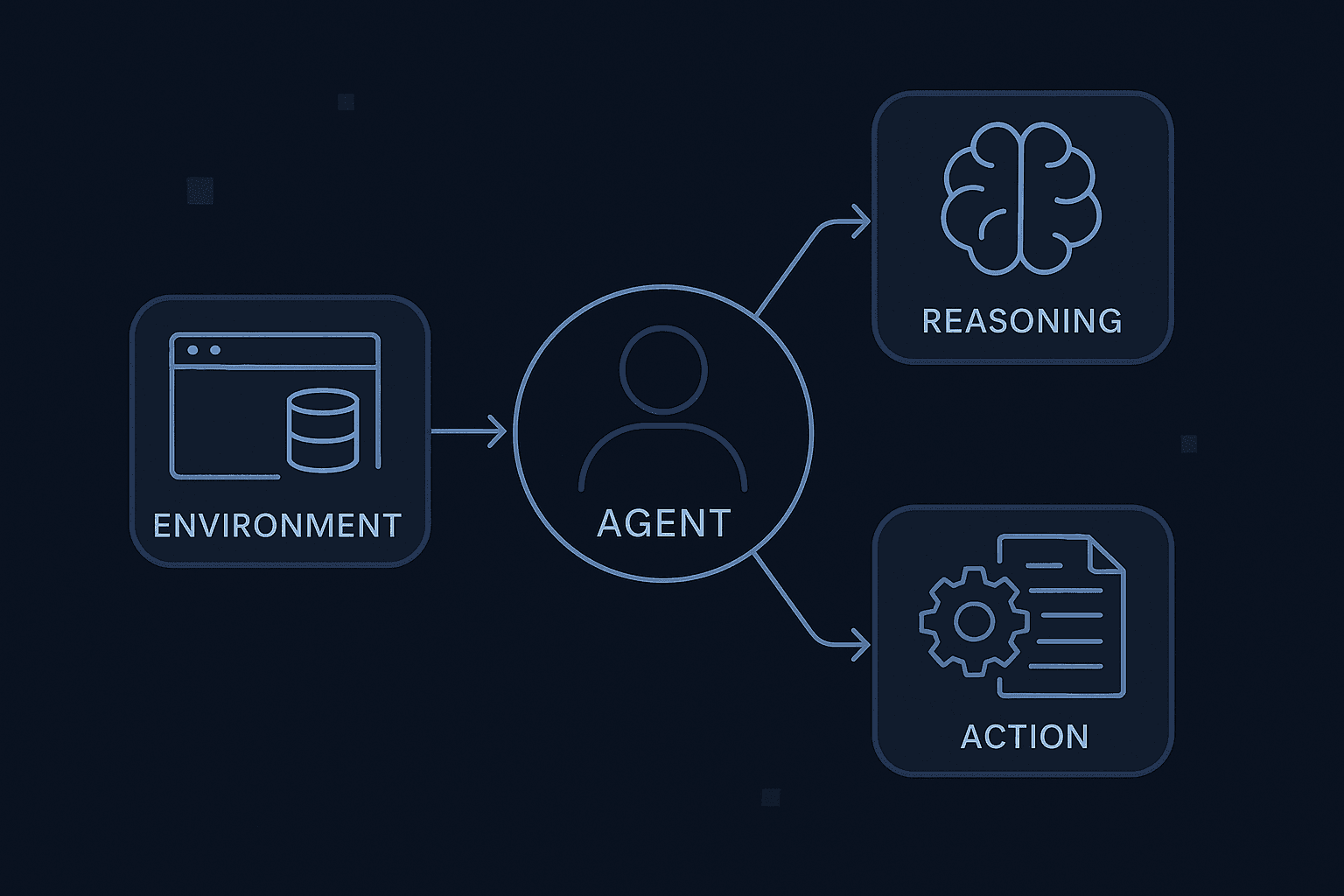
As AI evolves from reactive interfaces to autonomous systems, the term “agent” is becoming central to how we build and interact with software. But what exactly is an agentic system?
Read article
Apple’s server-based language model represents the other half of its AI story. While the on-device model powers quick, personal interactions, the server model handles complex, large-scale tasks.
Read article
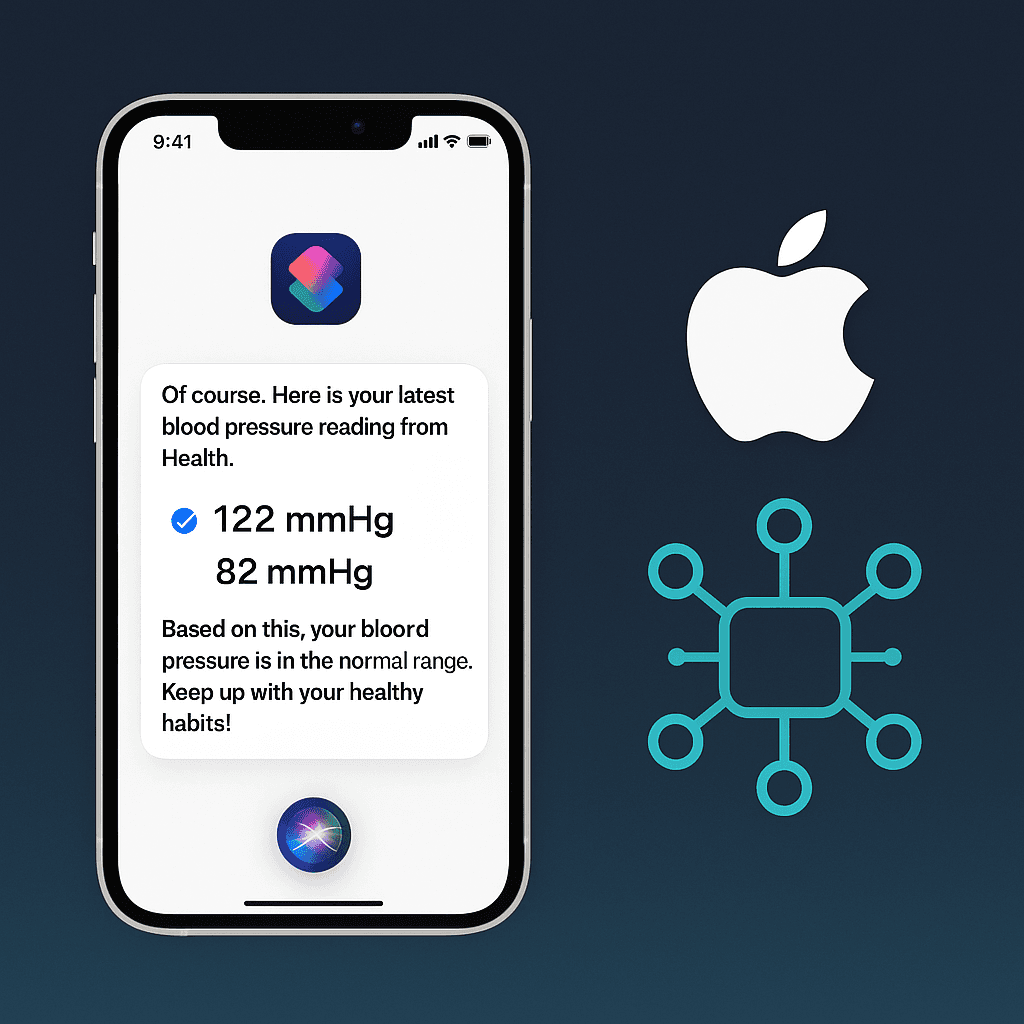
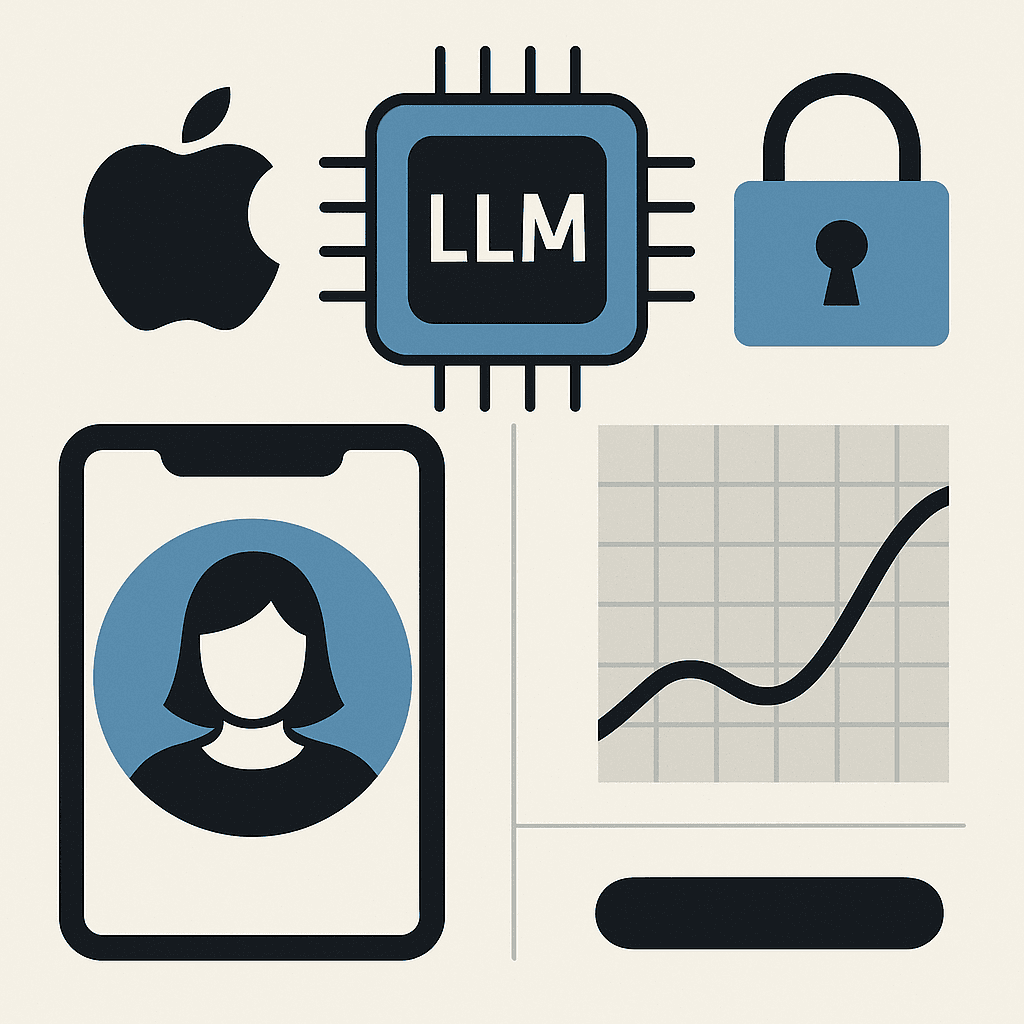
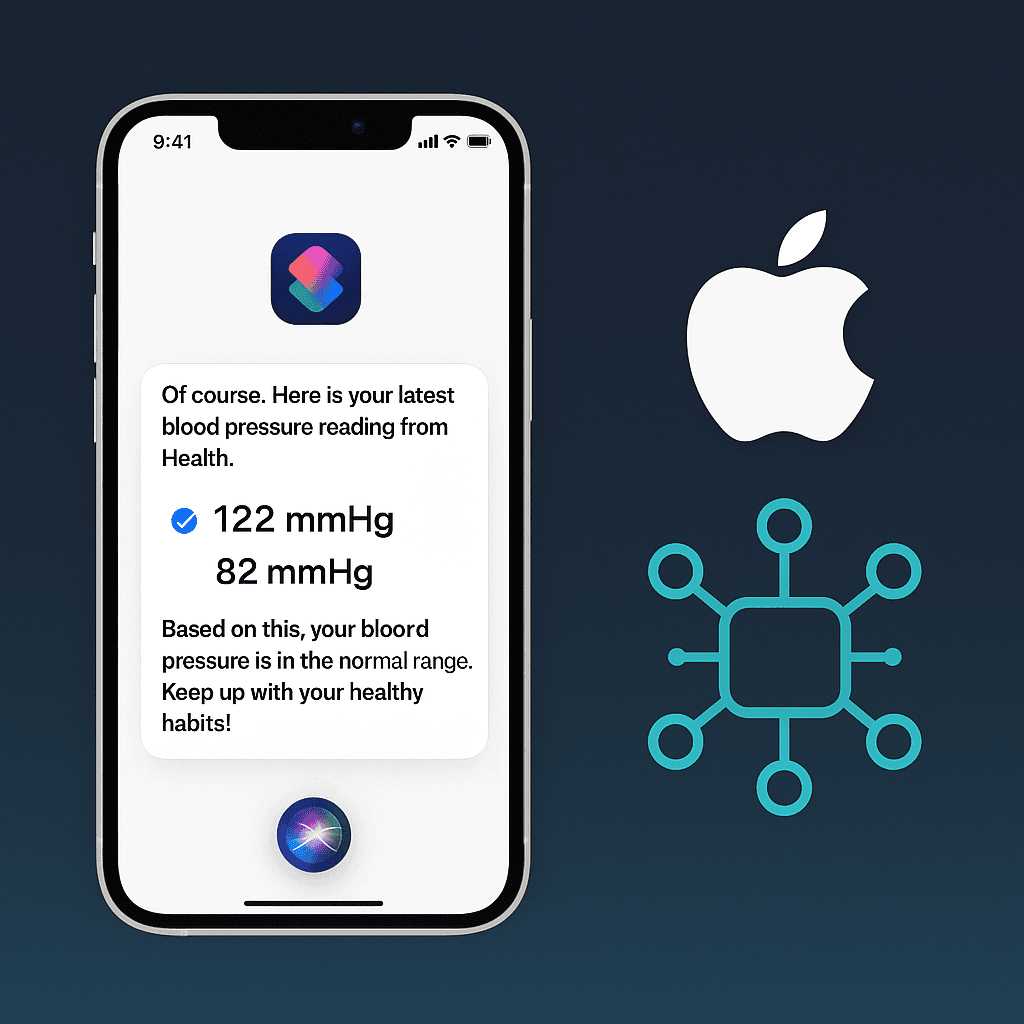
In 2025, Apple revolutionized AI development on its platforms by introducing the Foundation Models framework. This API gives developers access to Apple’s private, on-device ~3B parameter language model that powers Siri and Apple Intelligence.
Read article
At hussh.ai, a movement is taking shape - one that blurs the lines between software engineering, biology, and collective intelligence.
Read article
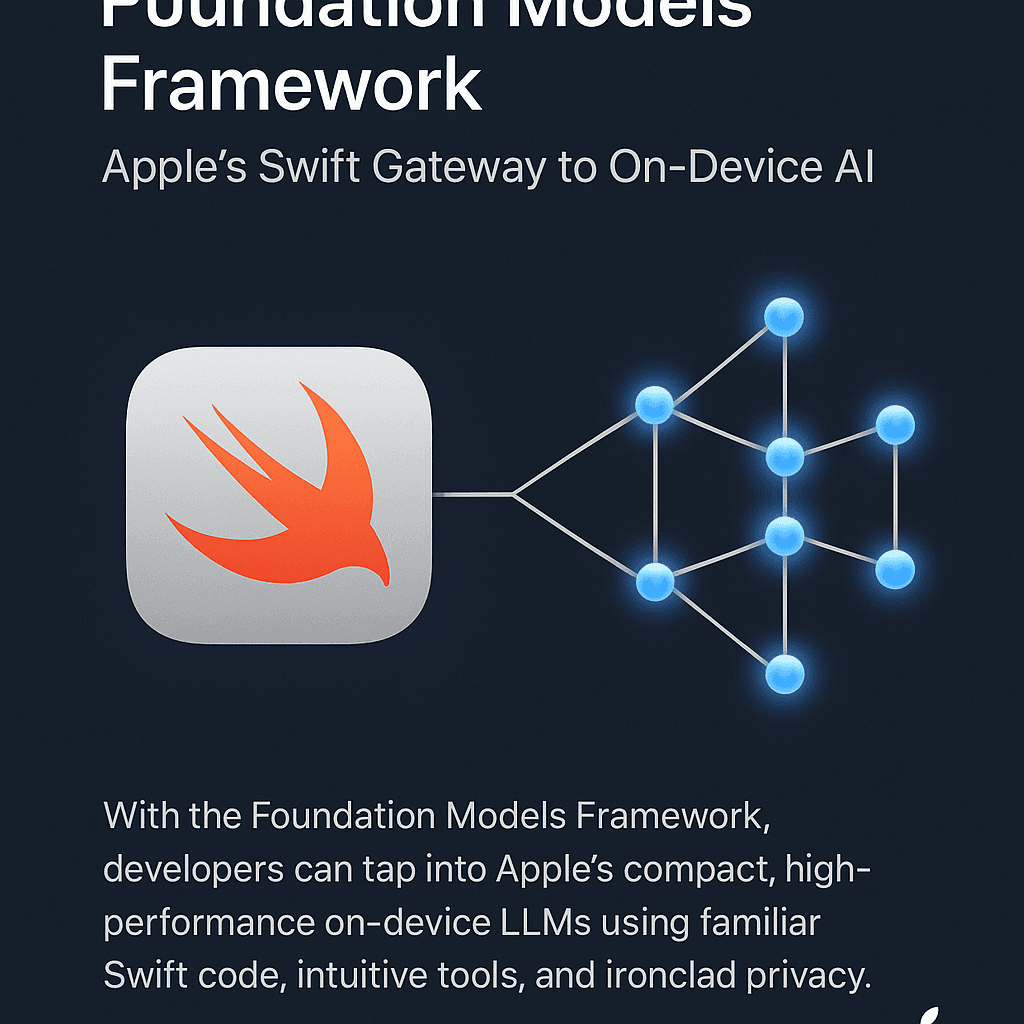
With the Foundation Models Framework, developers can tap into Apple’s compact, high-performance on-device LLMs using familiar Swift code, intuitive tools, and ironclad privacy.
Read article
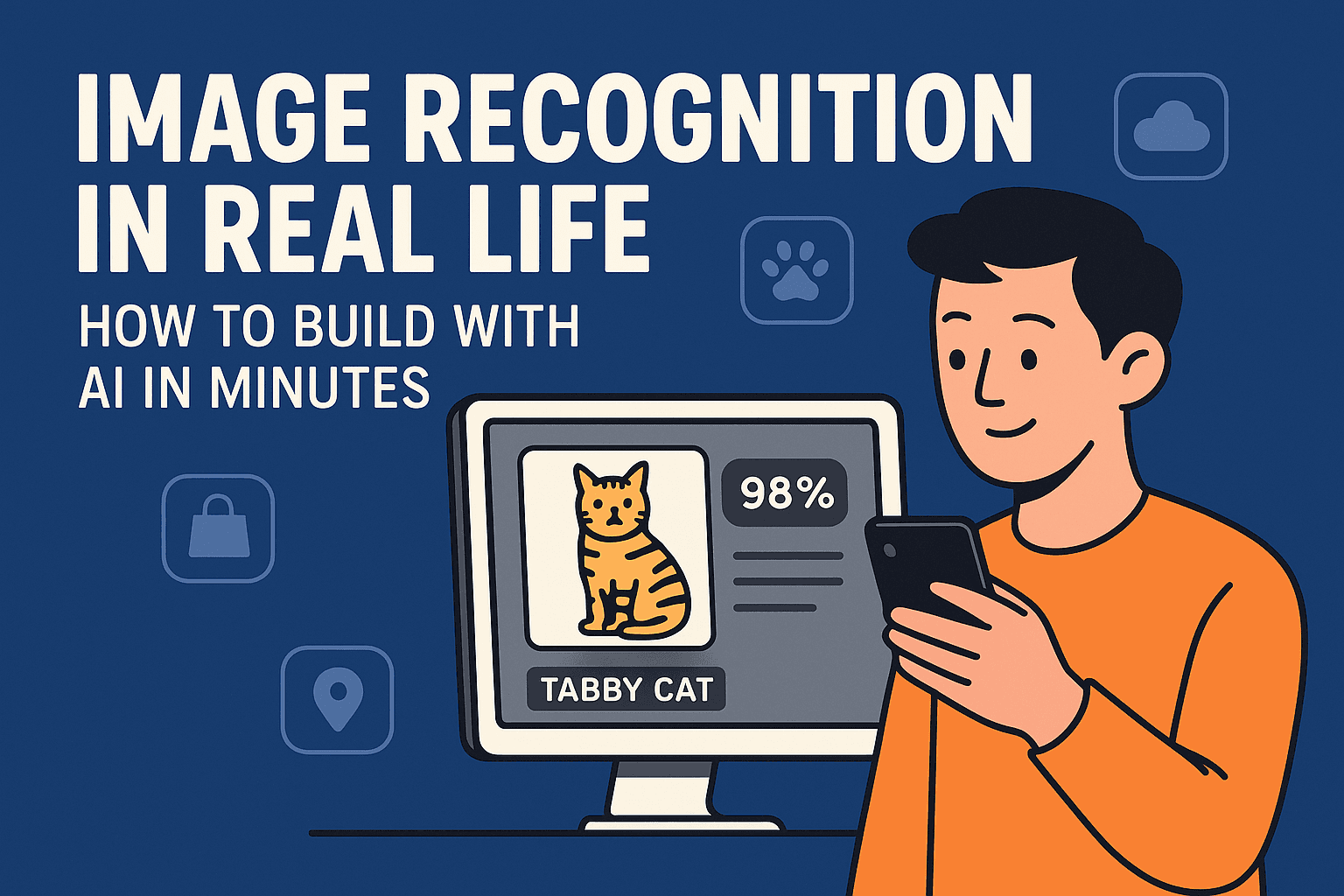
Image recognition has quietly become one of the most impactful AI technologies in daily life - from unlocking your phone to helping farmers monitor crop health via drone footage.
Read article
Apple's approximately 3B-parameter on-device language model powers a new era of intelligent apps on iPhones, iPads, and Macs. It is designed to deliver low-latency, privacy-first generative AI directly on Apple devices.
Read article
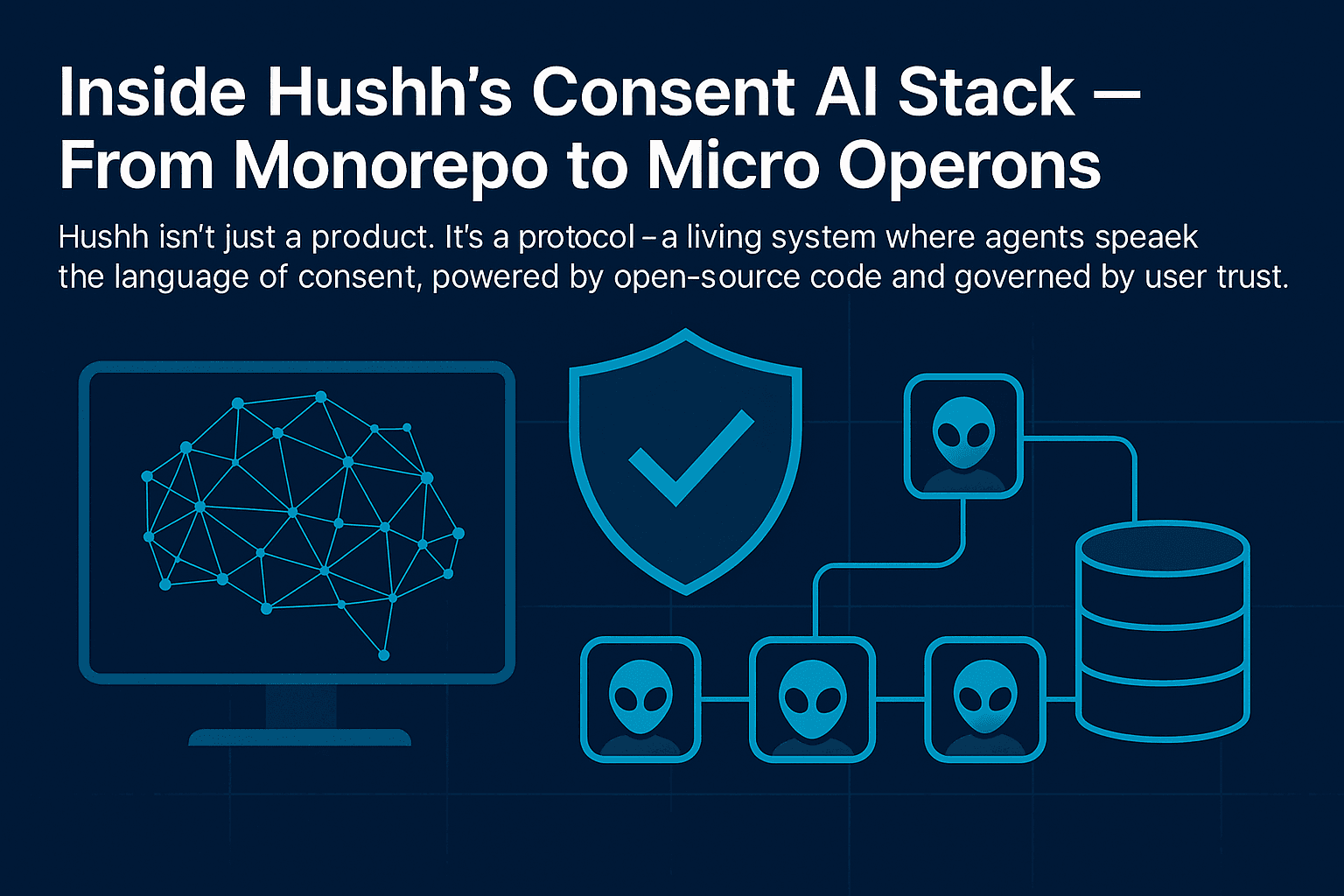
hussh isn’t just a product. It’s a protocol - a living system where agents speak the language of consent, powered by open-source code and governed by user trust.
Read article
Most AI products today rely on massive cloud models. These systems transmit user input - everything from health metrics to private conversations - to centralized servers.
Read article
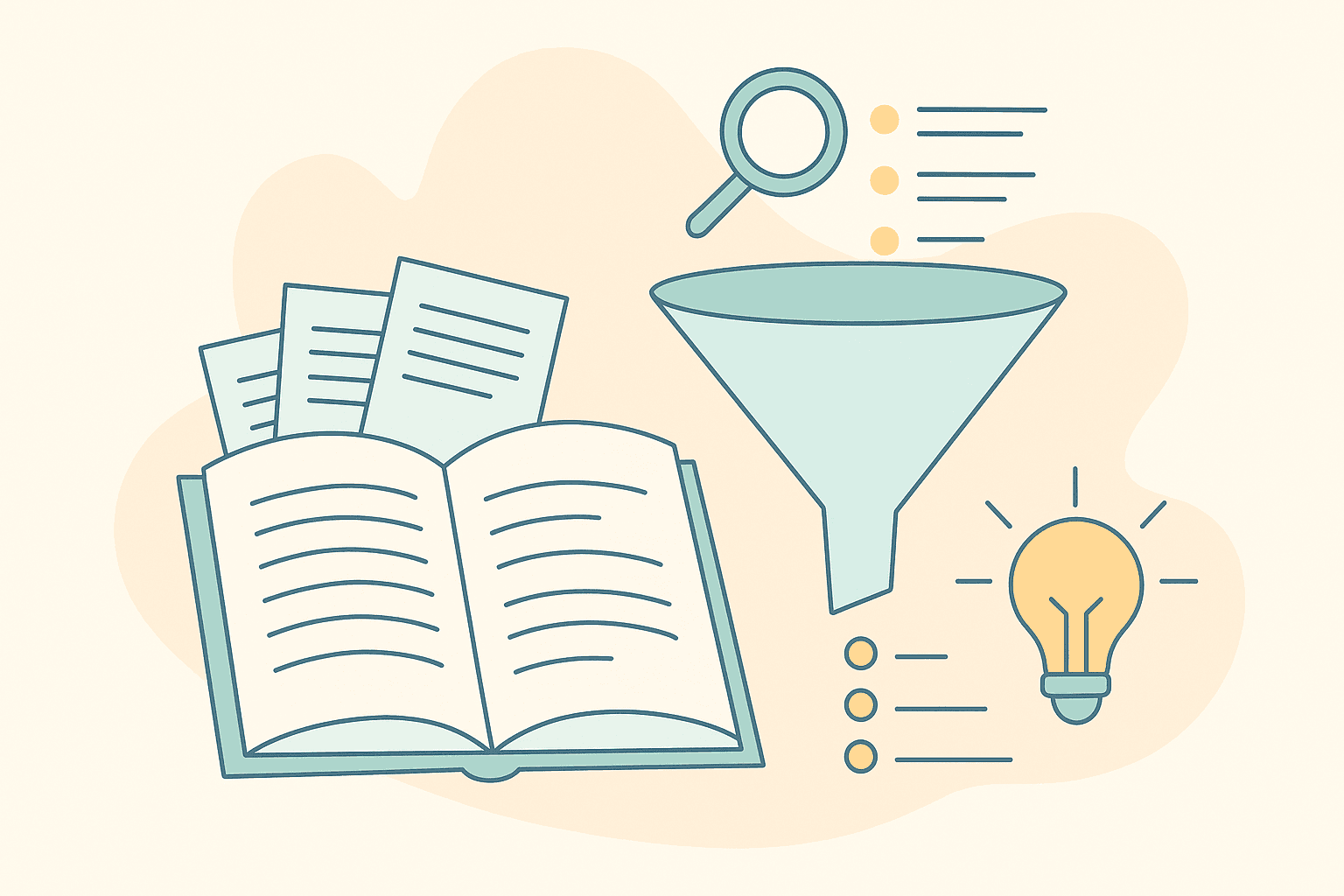
In today’s world, time is the new currency. From news articles and academic papers to emails and meeting notes, people are overwhelmed with text. Enter summarization - an AI-powered technique to boil down complex text into crisp, clear takeaways.
Read article
Voice is natural. Whether you're dictating notes, talking to a smart speaker, or attending meetings - audio is everywhere. But AI transcription used to be complicated, inaccurate, and expensive.
Read article
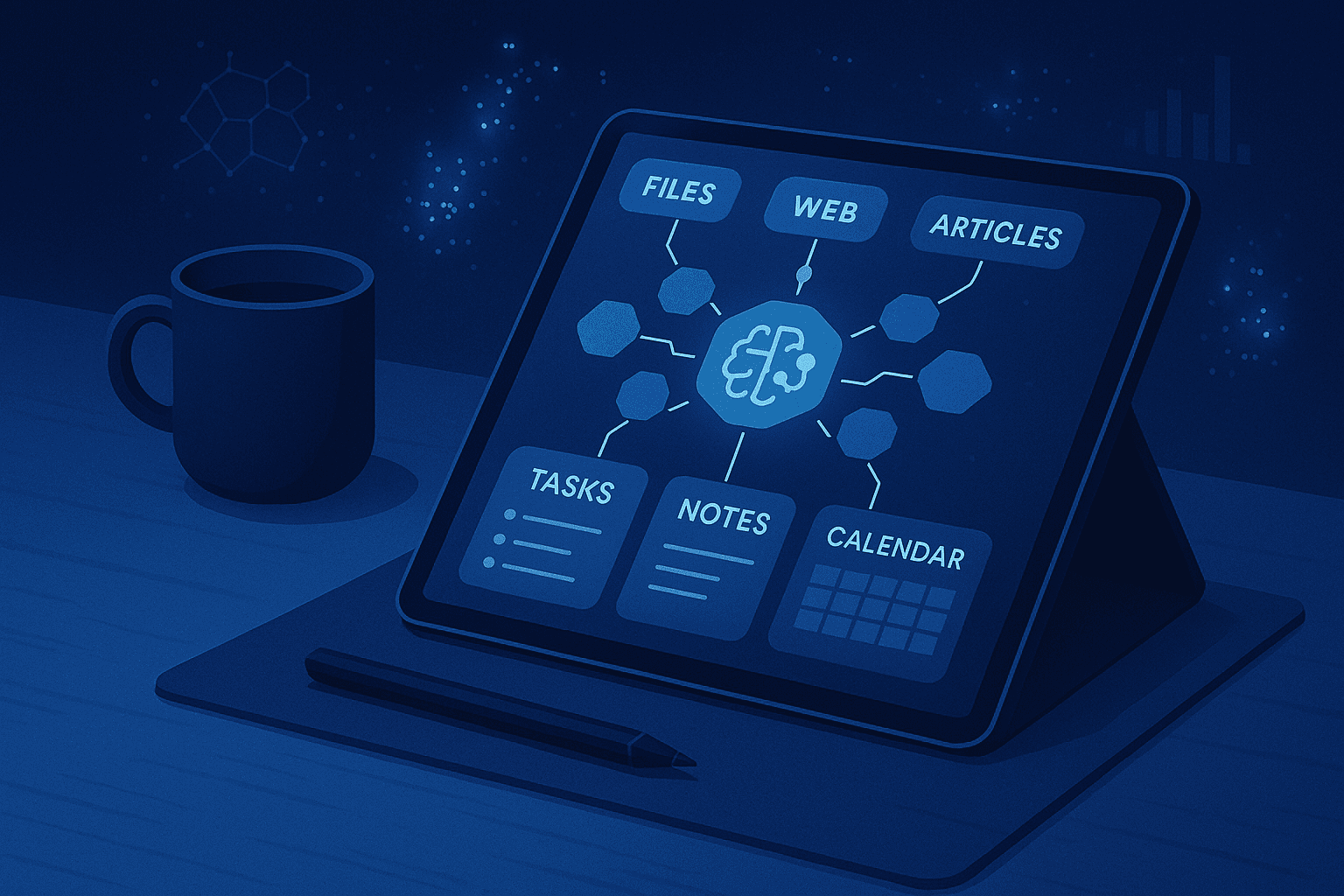
Discover how a Personal Knowledge Model (PKM) can help you manage your digital life effortlessly.
Read article
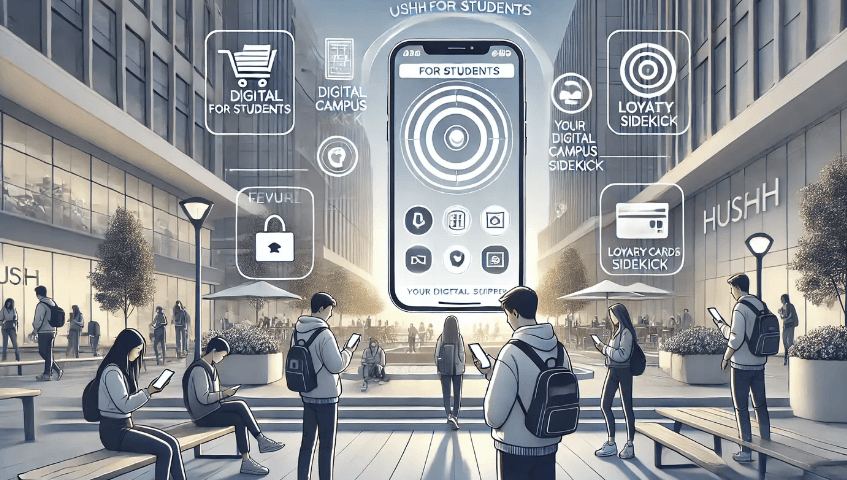
Transform your college experience with hussh for Students, your digital BFF for seamless campus interactions and personalized experiences.
Read article
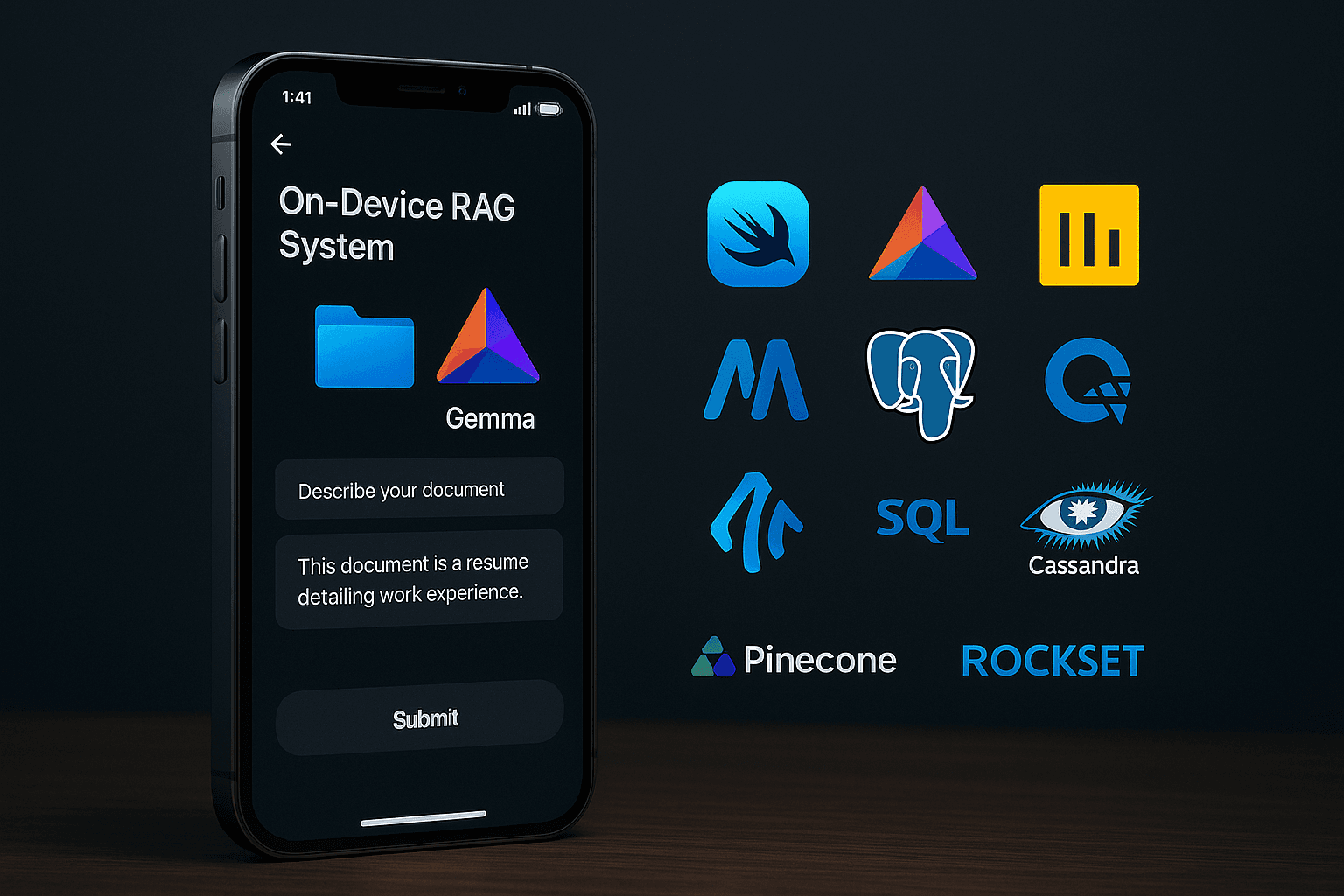
App for Interacting with private files
Read article
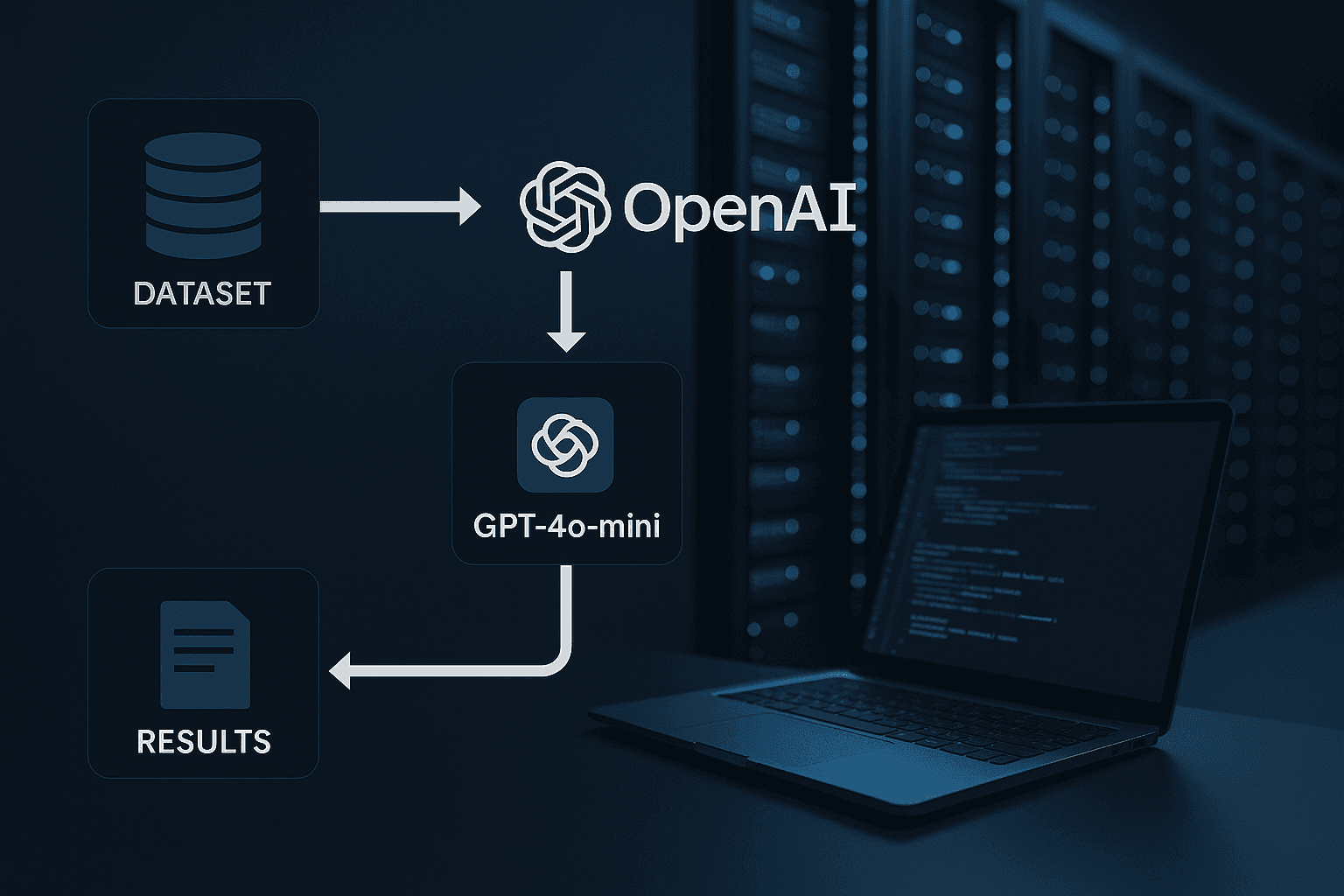
A detailed guide on setting up an automated batch processing pipeline using OpenAI API.
Read article
A detailed guide on setting up an automated batch processing pipeline using OpenAI API.
Read article
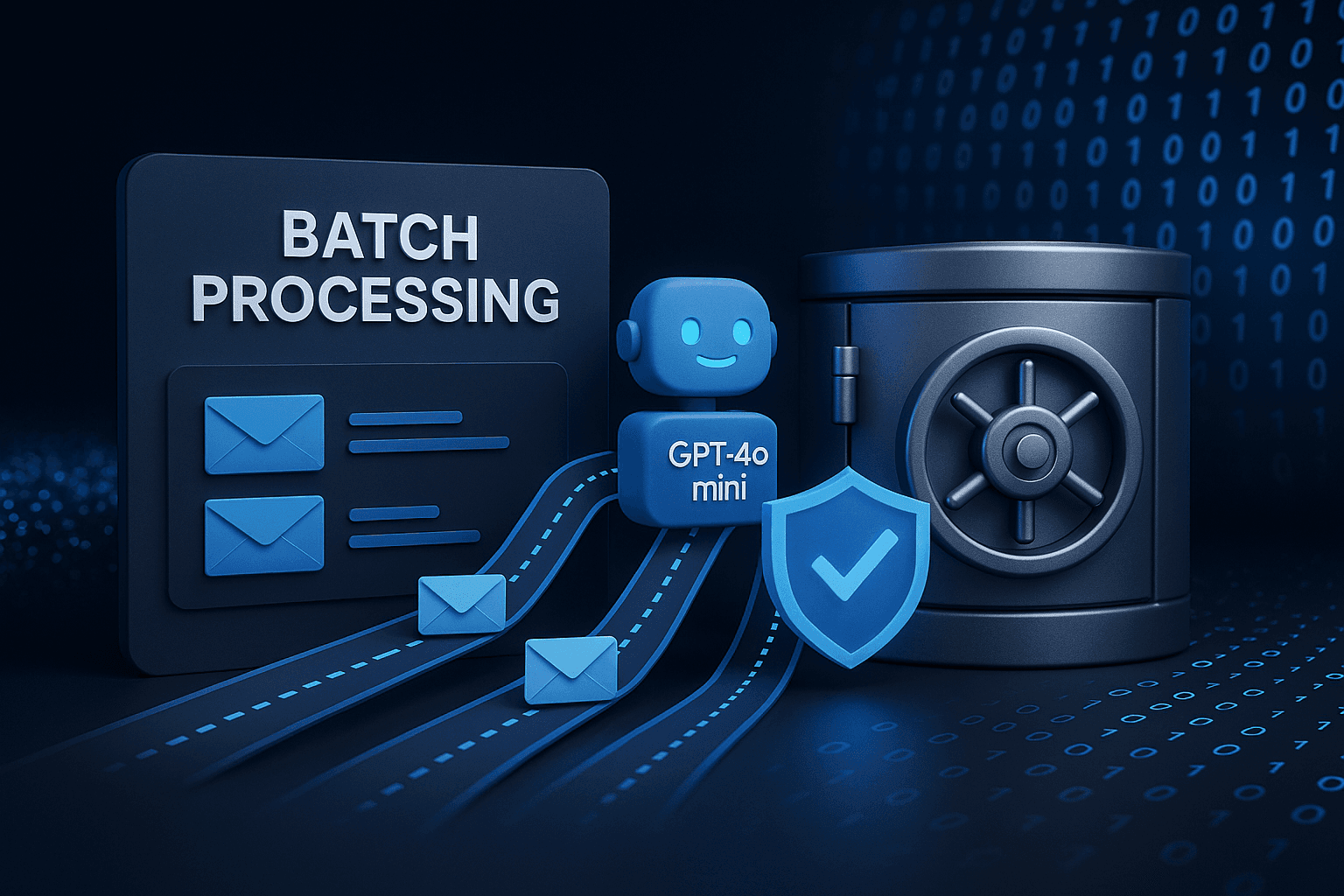
Saving the batch processed data into the database
Read article
Explore how hushh.ai empowers individuals to safely and ethically monetize their personal data while ensuring privacy and control.

Read article
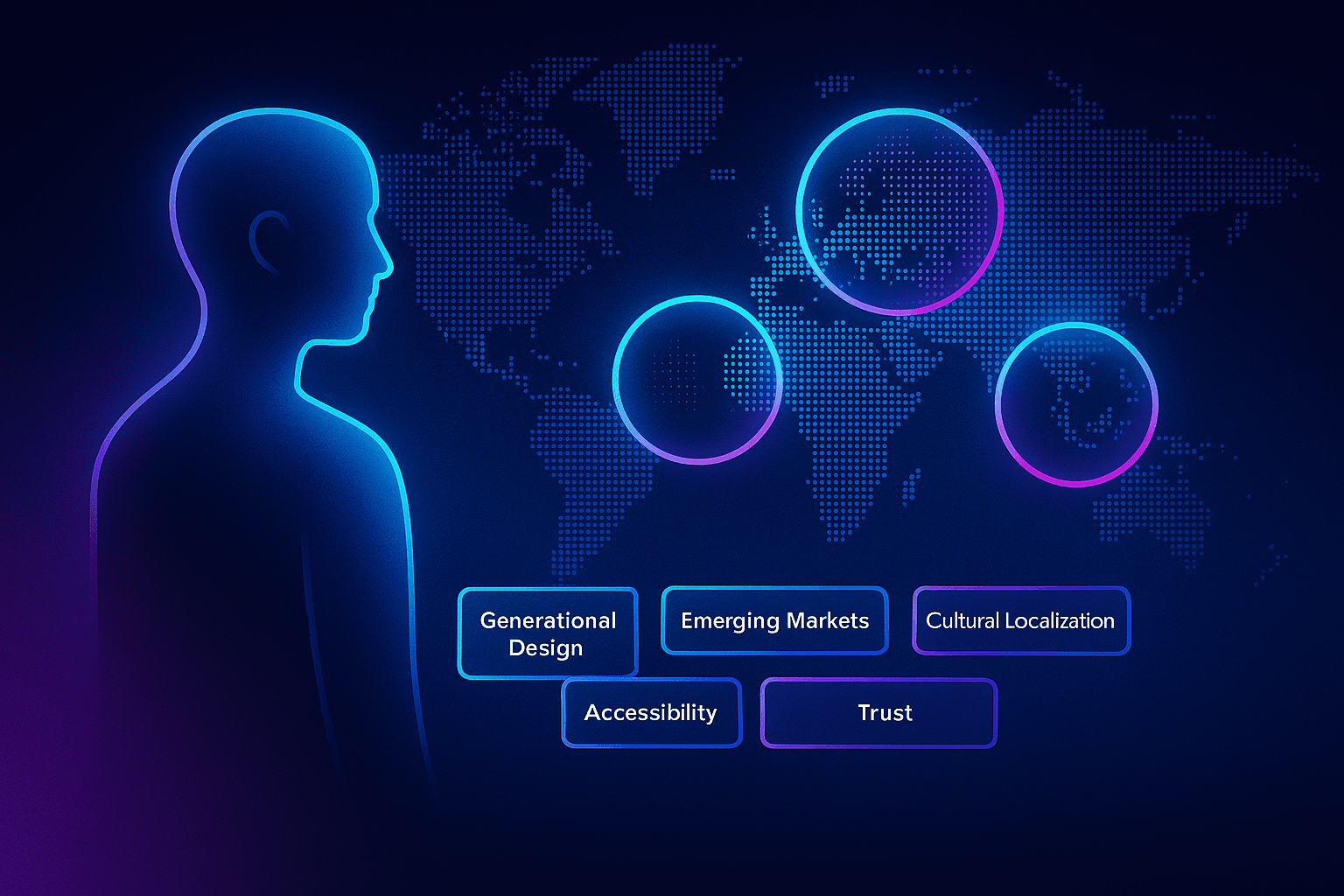
Discover how UX design can uncover and serve untapped markets, focusing on generational design, emerging markets, cultural localization, accessibility, and trust.
Read article
Explore how aligning business potential with UX design creates meaningful experiences that resonate with users and drive success.
Read article
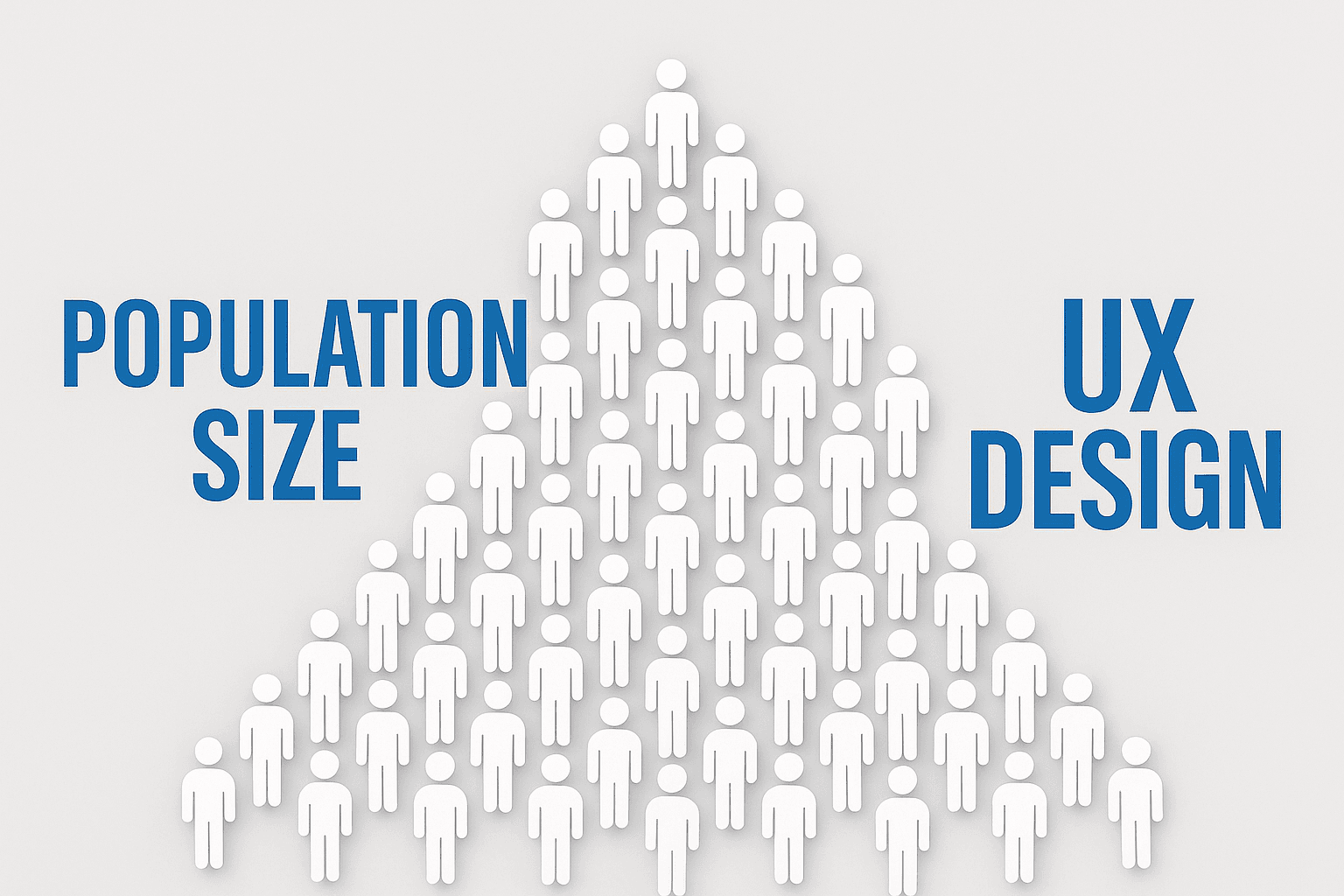
Explore how understanding population size and demographic diversity can enhance UX design by making it more inclusive and scalable.
Read article
Explore how understanding the business ecosystem enhances UX design by aligning user needs with organizational goals.
Read article
Explore how advancements in technology like AI, AR, and big data are reshaping UX design and how hussh is leveraging these tools.
Read article
Explore the evolving trends in UX design, including AI-powered personalization and the impact of data privacy regulations.
Read article
Learn how to efficiently extract and manage Gmail receipts using automated tools and techniques tailored for developers.
Read article
Explore strategies for uncovering underserved user groups in UX design to expand reach and enhance user engagement.
Read article
Explore how industry trends like cloud computing, 5G, AI, AR, and sustainability are transforming UX design and how hussh is leveraging these advancements.
Read article
Discover how hussh leverages Apple Silicon's M2 Ultra chip for privacy-focused AI solutions
Read article
Explore how effective UX design can enhance user engagement and drive business growth by personalizing user experiences and increasing conversion rates.
Read article
More than just raw numbers, population data provides insight into behaviors
Read article
Industry Trends And Untapped Segments
Read article
The VIBE Search Revolution
Read article
How hushh Empowers You to Monetize Your Personal Data
Read article
A Blend of Magic and Innovation!
Read article
Maintaining trusted deployments at hussh are paramount. Here we dive into our best practices on one of our open source libraries
Read article
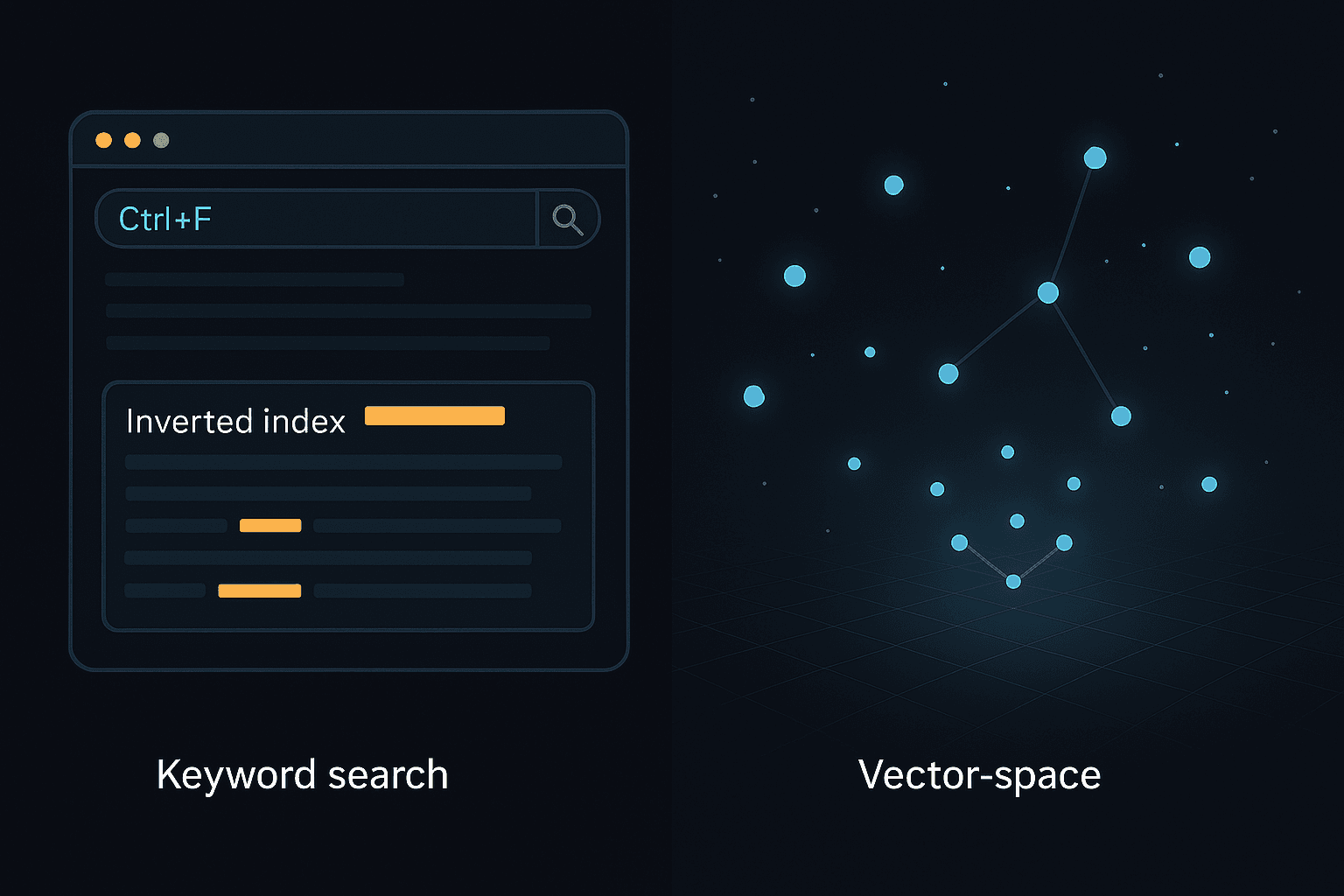
Vector Databases are in vogue, but do you really need one to support your AI powered Search?
Read article
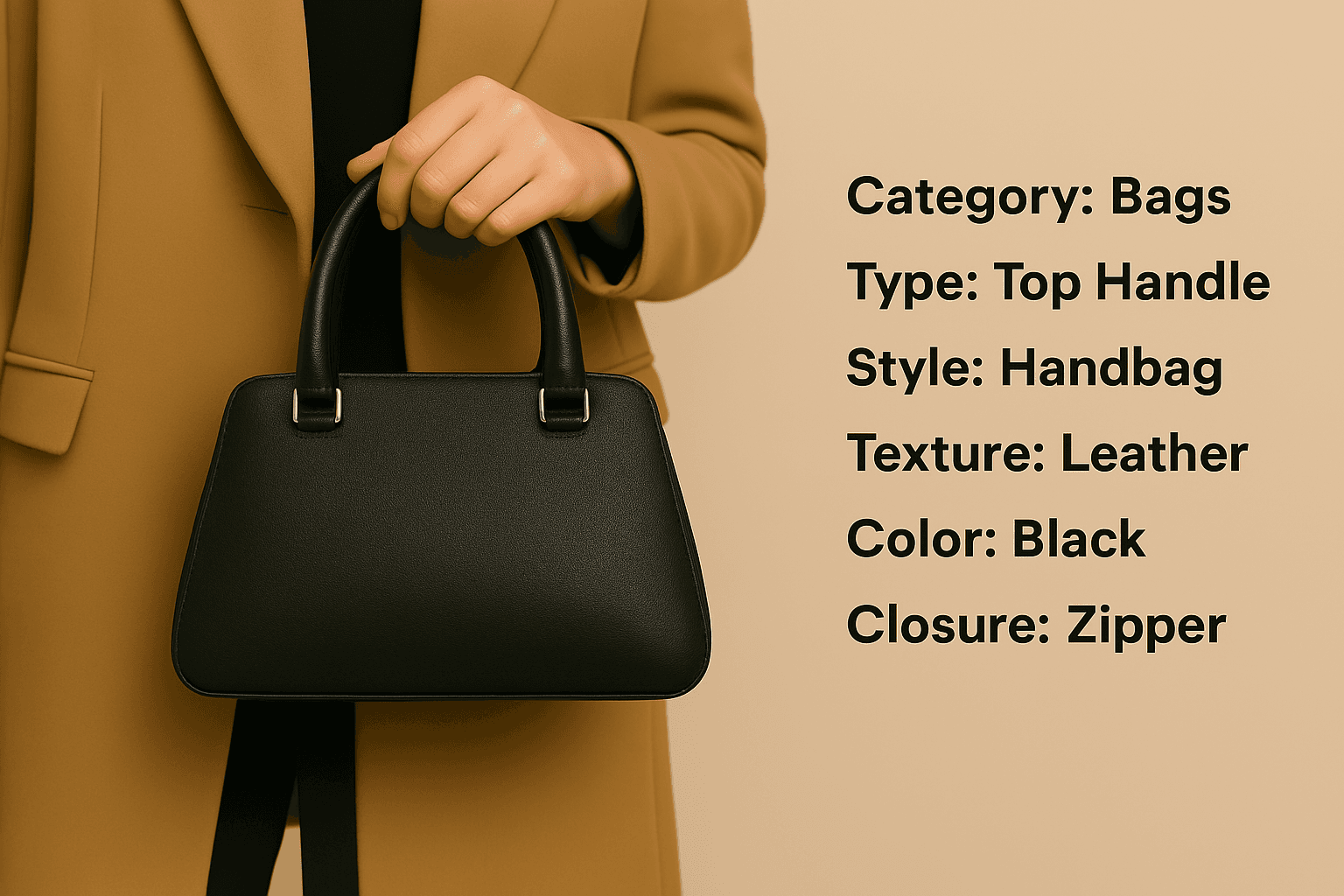
Customers regularly express preferences for brands based on their attire. How can retail adapt and learn without compromising privacy?
Read article
Explore how language models are revolutionizing the fashion industry by enhancing understanding of trends, generating creative content, and improving recommendations while prioritizing user privacy.
Read article
What does hussh believe? What are we working towards?
Read article
Search and discovery go hand in hand when finding the frontiers for personal taste
Read article
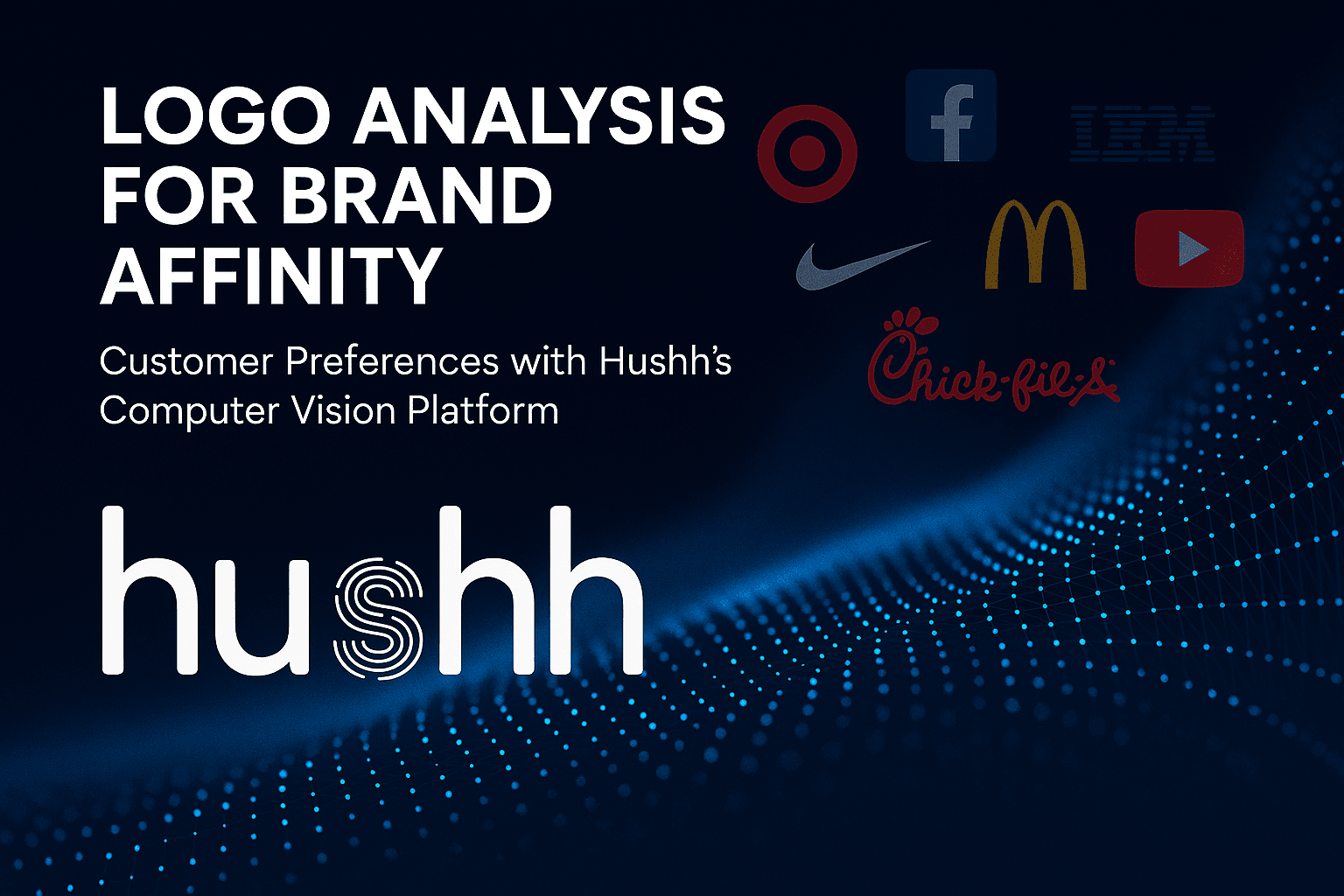
Customer Preferences with hussh’s Computer Vision Platform
Read article
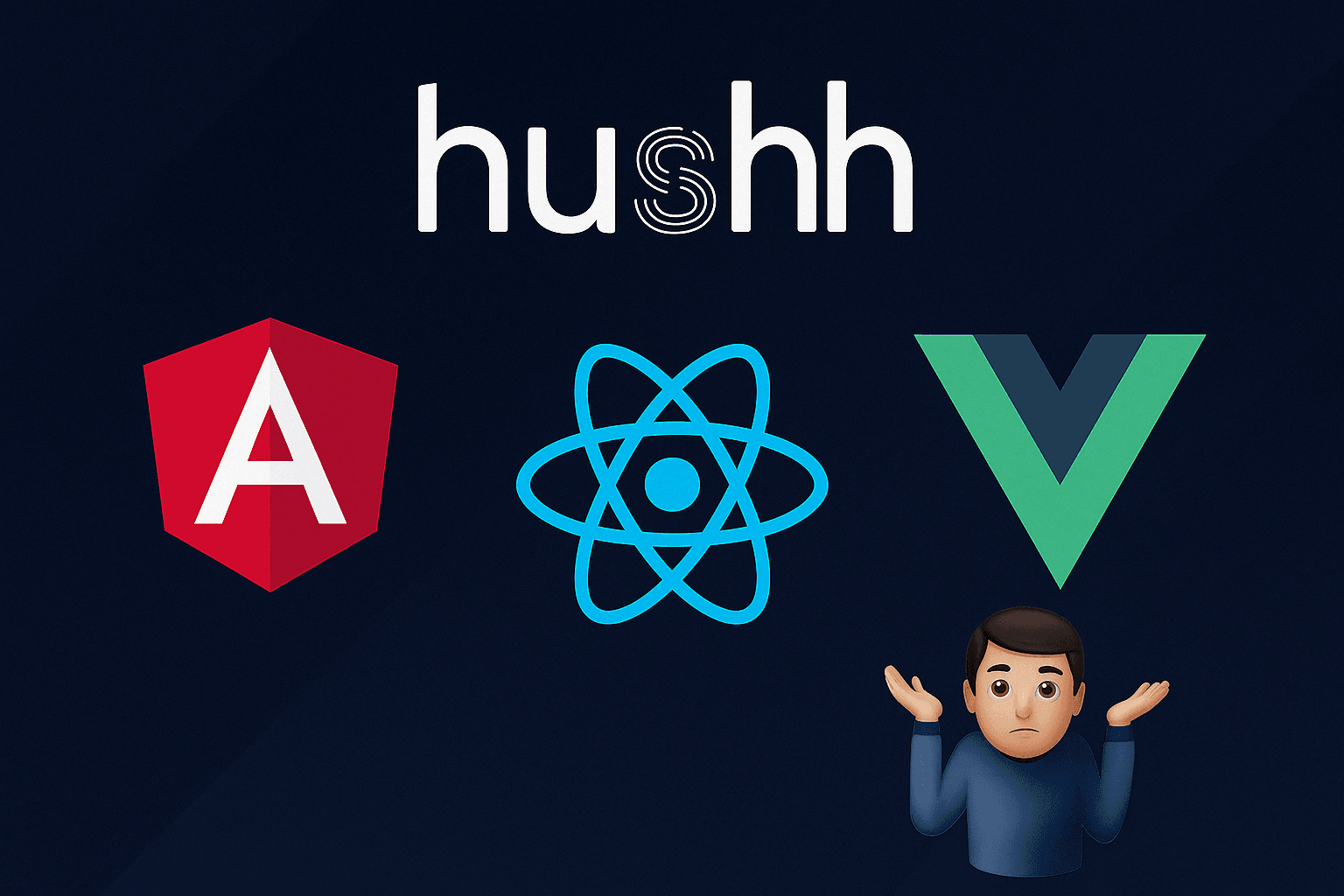
Get a detailed comparison of three popular JavaScript frameworks - Angular, React, and Vue.js. Understand the strengths, weaknesses, and use cases for each framework to make an informed decision for your next web development project.
Read article