Agentic Systems Demystified - The Future of Intelligent AI Applications
As AI evolves from reactive interfaces to autonomous systems, the term “agent” is becoming central to how we build and interact with software. But what exactly is an agentic system?
Introduction
As AI evolves from reactive interfaces to autonomous systems, the term “agent” is becoming central to how we build and interact with software. But what exactly is an agentic system? And why does it matter in the age of large language models (LLMs) and tool-augmented AI?
This blog explores the foundational ideas from Google’s “Agentic Design Patterns” handbook, breaking down what agentic systems are, how they differ from traditional software, and what makes them critical for the next generation of intelligent applications.
What Is an Agentic System?
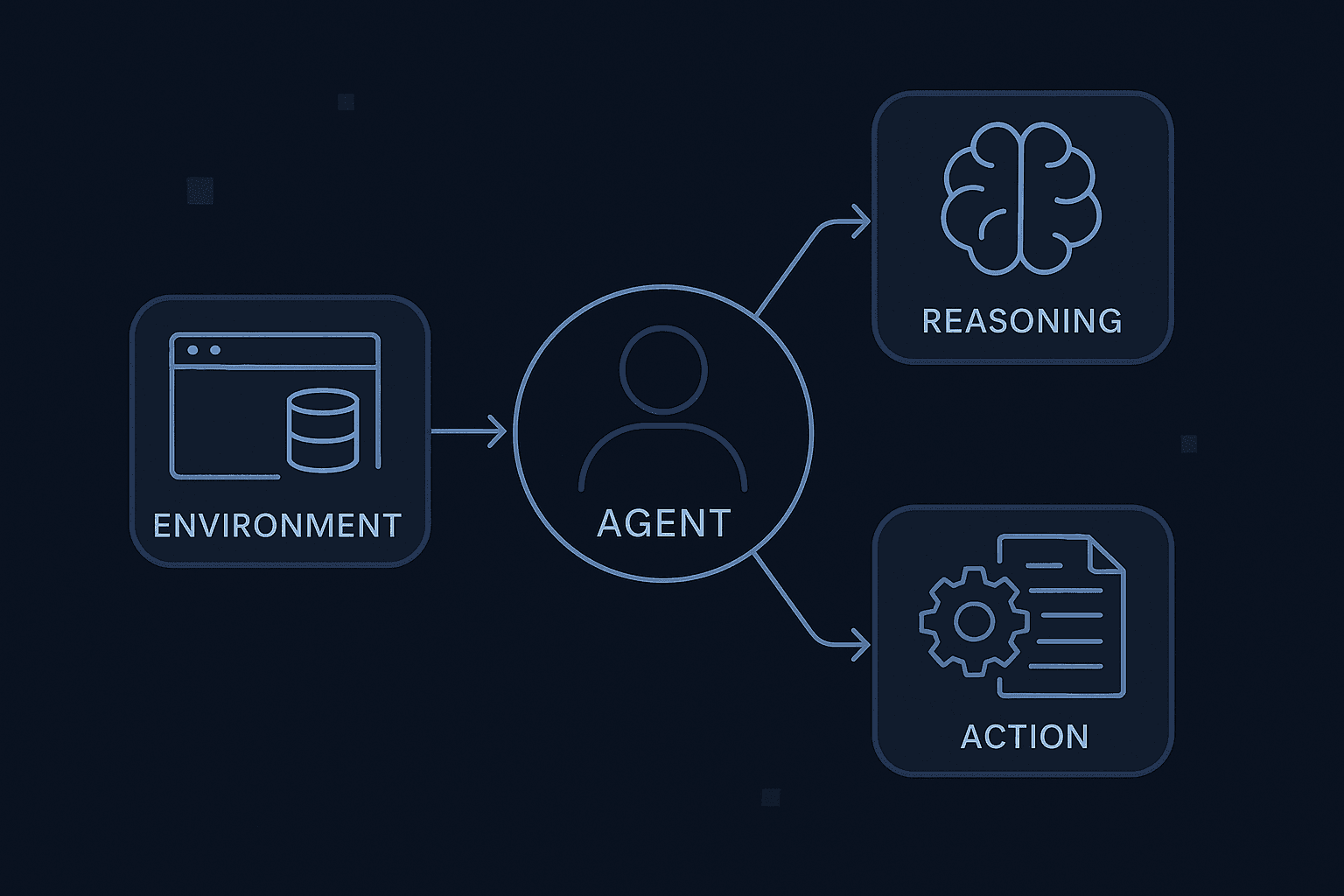
At its core, an agentic system is a software entity capable of three things:
- Perceiving its environment - gathering context from user inputs, APIs, databases, or even sensor data.
- Reasoning based on goals - making informed decisions aligned with explicit or emergent objectives.
- Acting autonomously - invoking tools, APIs, or generating language to achieve its goals without direct instruction.
Unlike traditional rule-based automation, agents are context-aware and dynamic. They don’t just “if-this-then-that” their way through code - they adapt, plan, and collaborate.
“An agent isn’t a program with a script. It’s a dynamic force within your application, capable of deciding and doing things on its own.” - Agentic Design Patterns
️ Why We Need Agents Now
The arrival of LLMs (like GPT-4, Gemini, Claude, etc.) has unlocked powerful reasoning and communication skills in machines. But these raw capabilities are like an engine without a car chassis. You need a structured system - an agent - to harness this intelligence effectively.
Agentic systems:
- Integrate with tools like databases, search engines, or custom APIs
- Manage state and memory across multiple interactions
- Collaborate with other agents or users
- Respond intelligently to new or unexpected input
This is especially relevant in environments like customer support, workflow automation, or enterprise copilots - where the “agent” must not only think but act across systems.
Beyond Chatbots: What Agents Actually Do
The term “AI agent” has been thrown around a lot, but most applications still behave like advanced autocomplete tools. A true agent is a layered entity with:
- Autonomy: Able to operate without human intervention.
- Proactivity: Capable of taking initiative (e.g. suggesting next steps).
- Tool-Use: Calling APIs, performing searches, updating records.
- Stateful Memory: Retaining what happened earlier to influence what it does next.
- Inter-Agent Communication: Collaborating with other agents to divide complex tasks.
For instance, imagine a travel assistant agent. It doesn’t just search flights. It checks your calendar, books at optimal times, alerts you if a visa is required, and talks to a budget agent to ensure it meets expense constraints.
The Infrastructure “Canvas”
A core metaphor in the guide is the concept of a “canvas” - the infrastructure where agents live, think, and act. This could be a LangChain graph, a CrewAI multi-agent setup, or Google’s own Agent Developer Kit.
Think of it like a digital stage. The agent is the actor, but it still needs props, scripts, and stage cues to perform effectively. Patterns help define how this stage is set and how the actor behaves on it.
Real-World Examples
- Support Agents: Route tickets, summarize conversations, retrieve internal docs, and escalate only when needed.
- Sales Agents: Analyze CRM data, draft follow-ups, and generate insights about pipeline health.
- Research Agents: Read multiple sources, compare opinions, and generate a consensus summary with citations.
These aren’t science fiction - they’re already being built today.
Conclusion: We’re Entering the Age of Agents
The era of simple AI wrappers is coming to a close. The future belongs to agentic systems - those that can reason, remember, interact, and self-improve. Whether you're a developer, product designer, or startup founder, understanding what makes an AI “agentic” is no longer optional.
It’s time to think beyond prompts - and start designing intelligent systems that can act.
The 🤫 hussh magazine
Written by Manish Sainani, and built to read beautifully here — and to travel to 🤫 One on your phone, your glasses, and visionOS, as one immersive magazine you own.